
Author: Jacques de Villiers

  • Do you have heft and influence?

    Do you have heft and influence?

    The other day I had a meeting with someone. The meeting went well. He ticked all the boxes … he was articulate, interesting and informed. He was what you’d call a solid guy. As we started wrapping up he gave me his business card (yes, people still do that).

    That’s when he blew it.

    The card was as flimsy and flighty as a feather. It had no weight, nor authority nor influence. Not only didn’t it have heft but both the logo and text were pixelated. The text was like a dirty, life-worn faded tattoo on an aged, wrinkled arm.

    My reaction to the card was primitive and visceral. I was instantly unsure of this person and in that moment cut any notion I may have had of starting a business relationship. There was no logic to it. One minute I was enamoured, the next minute I couldn’t wait to put distance between us.

    In that moment a 100 000 year prime directive that pushed Homo sapiens to the top of the food chain kicked in: Survive!

    You probably already know that we’re attracted to people who make us feel safe and we avoid people who don’t. No amount of logic can account for it … but that business card triggered my flight and fight response … I felt unsafe.

    In a business context I have a similar reaction when a business has a hotmail, Yahoo or gmail email account (my scam radar is activated).

    — Or when I ask someone what their website address is and they say, “I don’t have a website right now”.

    — Or when I go to a website and the company name is preceded by wix/companyname.com or wordpress/companyname.net.

    I feel that maybe they’re not serious enough.

    Do you have influence and make people feel safe?

    Before you you think I’m being overdramatic stop for a moment and think about the people and organisations that you surround yourself with.

    • Do they make you feel safe?
    • Do you trust them?
    • Do you like them?

    Why’s that?

    Like you, I’m more inclined to align myself to people and organisations that I perceive to be able to protect me, keep me safe and that have my best interests at heart.

    Those that help me survive and thrive.

    They have weight, substance, power, gravitas and influence.

    They have HEFT!

    Firefighters have heft and gravitas. They make you feel safe.

    Firefighter Aimee Thatcher ’96 poses for a portrait December 9, 2015 at the Las Vegas Fire Department Training Center in Las Vegas, Nevada. Thatcher is one of 27 women in a department of 650 firefighters.

    The whole business card incident got my creative juices flowing. And, I’ve crafted a Masterclass called HEFT – The Science of Moving People.

    It’s being held in Johannesburg on 17 July. Check it out here and see if it resonates with you.

  • Is the Dan Sullivan Question the mother of all sales questions?

    Is the Dan Sullivan Question the mother of all sales questions?

    I believe that the Dan Sullivan Question is one of the gold standards of questioning techniques for sales professionals.

    He published this short book in May 2010. I can’t recommend the book enough. I think it’s one of the best kept secrets in South Africa. Whenever I ask delegates on my sales courses if they’ve heard of the question, I seldom get a raised hand.

    Here’s the question.

    If we were having this discussion three years from today, and you were looking back over those three years, what has to have happened in your life, both personally and professionally.

    The Dan Sullivan Question
    The Dan Sullivan Question

    This is a great opening salvo and immediately gets the prospect thinking. He gets to the nub of the matter which is finding out what the prospect’s dominant buying motive is.

    Dominant buying motives comprise of four fundamental human needs: Security, Significance, Fulfilment and Harmony.

    In my world; sales optimisation, sales managers have needs and wants (dominant buying motives).

    Sales managers need their sales force to perform well and hit its number. The trick is to figure out the sales manager’s ‘why’.

    Why is it important for the sales team to reach its targets for the sales manager?

    There could be a bunch of under-the-surface reasons why:

    • If the team doesn’t hit its targets, the sales manager might get fired. The consequences would be disastrous: Can’t pay the bond, can’t pay the car, can’t pay the school fees and the like. Marital strain and self-esteem issues will follow. This speaks to our need for security – we have to cover our basics to survive at the very least.
    • The sales manager might want a promotion (to sales director, for example). If the team hits its number the sales manager might have a better chance. This speaks to both security and significance. Typically, with a promotion, there comes a pay increase. This makes the sales manager feel more secure. It also raises the standard of living. Having a higher title (sales director) also speaks to significance and status.
    • The sales manager may want to have more quality family time. If the sales team is performing, the sales manager doesn’t have to work overtime and can spend more time with the family. This speaks to fulfilment and harmony. For most of us, our relationships are one of our highest values and a massive driver for motivation.
    • The sales manager wants to spend time on his/her interests. If for instance, a sales manager was a keen golfer, my question would be, “How often do you play golf?” The answer might be, “Once a month.” My next question would be, “How often would you like to play golf?” Possible answer, “I’d love to play once a week.” I then close it off by asking, “If I could help you achieve your sales targets and get you onto the golf course four times a month, would you be interested?” I’ve nailed the dominant buying motive: golf. Now it’s about self-interest and fulfilment.

    The Dan Sullivan Question speaks to all the fundamental human needs: security, significance, fulfilment and harmony.

    If we were having this discussion three years from today, and you were looking back over those three years, what has to have happened in your life, both personally and professionally. This is not the only question in Dan Sullivan’s repertoire.

    He sequences to three more which are absolute genius in terms of building content for your proposal. When you see them, you’ll get that it’s part of the discovery process and you probably use them in one form or another.

    DOS Questions

    • What are the dangers that you’re (your organisation) currently facing?
    • What opportunities can you take advantage of?
    • What strengths can you build on?

    If you can find three points in each area (danger, opportunity and strength), you have nine points to build a great case for your product or service in your proposal.

    You get that this article doesn’t do justice to the brilliance of The Dan Sullivan Question, don’t you? The book is much more nuanced and impactful and is definitely something for you to consider reading.

    This question has worked really well for me and I’m convinced that it has helped me close more deals more consistently.

    It may work for you too.

  • Why your sales job will never make you happy and what to do about it

    Why your sales job will never make you happy and what to do about it

    If you’re in a sales job (or any job for that matter) and feeling insecure, powerless, unfulfilled and unhappy why not read the rest of the text and figure out what you can do about it.

    If you have the dreaded feeling that this job you’re in is not for you than you’re not alone. Most of us on this planet have this feeling because we totally missed the point of why we work.

    I’m going to argue two points. One you have no control over and one you do have control over.

    • The job you’re in now is not the job you ever thought you’d be doing in any of your dreams or nightmares. This you had no control over.
    • You have no idea of what your real job is, actually. This you have control over.

    The sales job you’re doing now was never in your plan, was it?

    I don’t know about you, but my plan was never to be in sales. Like you, I had other ideas.

    I only ever dreamt of two jobs: to be a time traveller and to be a professor at a university, teaching philosophy.

    The first one … well they haven’t invented that one yet. When they do, I’ll be there.

    The second one was achievable but I was let down by my less than average IQ, finances and the lack of guts and determination.

    My dream of becoming a professor of philosophy was scuppered because I did really badly at school. I got a D average, enough for a matric (Grade 12) exemption but not enough to be accepted into university to study for my Bachelor of Arts degree.

    As if that wasn’t bad enough, I was then forced into two years military conscription.

    When I was released from the army I went to Wits Technikon (now University of Johannesburg) and studied for a National Diploma in Public relations and qualified in 1987.

    But it seemed like I’d got another ‘d’ as in diploma. My father who had a double doctorate in theology and philosophy (now you know why I wanted to study philosophy. Mmm, did I have daddy issues?) was not impressed that I’d only achieved a diploma.

    Thousands of rands and hours of therapy later, I’ve finally overcome the self-esteem issues caused by the thought that I only had a mere diploma and not a highly-prized doctorate.

    It definitely ain’t a degree

    I took the diploma and managed to get a public relations job for seven or so years .

    I then got a sales job at Liberty Life as a financial planner where I lasted 18 months.

    But the sales bug had bitten me hard and from then on I pursued a career in sales and finally ended in my own sales consultancy business in 1998.

    I love sales and marketing. But there are times when I feel insecure, uncertain and inferior because in my heart of hearts, nothing would have satisfied me more than a life of academia (and time travel).

    I sometimes think, “what if?”

    But mostly I think, “Yay, it’s worked out just fine.” I don’t know how my life would have turned out if I were an academic? It could have been good or it could have been a shambles.

    I do know that even though I think I stumbled and took a wrong turn by getting a sales job, it has worked out brilliantly for me. As a professional speaker, author and trainer over the last 20 or so years, I’ve had the most wonderful adventure. I’ve made the most fantastic friends, met stunningly gifted people and traveled to amazing places because of my work (Australia, France, Iran, Italy and Mauritius. And, of course, Malmesbury).

    Like me, a sales job for you may not have been your first choice.

    An apocryphal story for me (I can’t find actual research on it) is that the following question was asked of a graduating class of an Ivy League University: “When you graduate, how many of you will go into the sales profession?”

    The answer was that 4% were planning to get a sales job. The rest wanted to go into the careers they studied for.

    It turns out that 67% of those students actually ended up in a sales career because they couldn’t find work in the field of their choice.

    This means that there are square pegs in round holes. There are people in sales careers who don’t want to be there and just come for the paycheque.

    Whether this story is true or not, you already know in your heart of hearts whether it is true for you.

    For most of us, if we’re honest getting a sales job was not our dream.

    But you see, we had no real say in the matter, did we?

    Where we have ended up in this moment has more to do with serendipity, randomness and luck. You’ll find lots of references to this in Malcolm Gladwell’s Outliers: The Story of Success and Nasiem Taleb’s, Antifragile: Things that Gain from Disorder.

    If you’re getting ready to argue that the luck philosophy is bullshit and that you are where you are because of your own endeavours, then think on this.

    • Did you have any choice in the matter to the parents you were born to?
    • Did you have any choice on the date you were born?
    • Did you have any choice in which religion you were born into?

    The answer has to be a resounding ‘NO’. Just by the parents you were born to, the time you were born, the religion you were born into and the country of your birth has led you to where you are now. Your endeavours had very little to do with where you’re at now.

    If I have seen further than others, it is by standing upon the shoulders of giants.

    Sir Isaac Newton

    Of course the thing is not totally out of your control. What led you from there to here were the choices you made with what you had to work with. You do have choice how you’ll react to every situation you’re put in.

    If you’ve read this far, you’ve arrived at my second argument …

    You have no idea of what your actual job is

    When I ask people, “What’s your job”, I get answers like, “I’m a lawyer”, “I’m a sales professional”, “I’m a writer”, “I’m an accountant”, and so on.

    When I’m asked, I say, “I’m a professional speaker and author.”

    Our actual job, in my opinion, is getting to our death in good shape.

    The work we do now is just a piece of process to prepare us for our final moment.

    There are two ways you can look at getting to the end. From an agnostic/atheist perspective or from a religious/spiritual perspective.

    From an agnostic/atheist viewpoint most of us want to get to the end having done something magnificent. We want to leave a legacy. We want people to remember us for what we’ve done.

    From a religious/spiritual viewpoint we want to make sure our soul is intact so that we can enjoy the benefits of the hereafter.

    Whether we’re agnostic/atheist or religious/spiritual, the path to the end is the same and there are two path we can take.

    Couch Potato Path

    We can either take the path that thinks this life is an arbitrary, throwaway exercise. In other words, we take this short time we have on this planet for granted. We aren’t grateful that we’re conscious and get to play here for a little while. That we get to live, love, lose, win and everything in-between. We don’t try and better our lot, we lead a couch potato existence of TV, fast food, social media, hedonism and self-interest.

    coach potato in your sales job
    We spend around 12 years of our lives watching TV

    Work of Art Path

    Or we can take the view that we’ve been put on this planet to be a work of art and to do or be something exceptional. If you’re agnostic/atheist you’re the kind of person that wants to “dent the universe” (from Steve Jobs) and leave something fantastic behind for other people to benefit from.

    If you’re religious/spiritual your job is to give your maker something magnificent as a ‘thank you’ for letting you play here for a brief time.

    It doesn’t matter what you believe … whether there is a creator and an afterlife or whether your life ends and that’s all there is to it … what matters is how you conduct yourself with what you have.

    What matters is how this journey will end for you. Do you want to end it as a couch potato or do you want to end it as a magnificent work of art?

    Are you a work of art. Guernica by Pablo Picasso 1937
    Guernica by Pablo Picasso 1937

    That, you do have a choice on.

    If you choose to be a magnificent work of art then it’s simply a matter of reframing your current job and using it to become the best version of yourself.

    Everything you do from this day forward, every piece of process, every interaction you have with another human and every thought is conspiring to push you in one direction or the other.

    I don’t know about you, but I know that my debt of duty and of gratitude that I get to play here for a short while definitely wants me to to end it all with something magnificent.

    Even though your sales job may not be

  • Sales professional – Are you a castle builder or a cathedral builder?

    Sales professional – Are you a castle builder or a cathedral builder?

    As a sales professional you’re the master builder of your life.

    Builders all find their niche. Some build houses, some build apartments, some build office blocks and some build castles (not so much anymore). The rare ones get to build Cathedrals.

    Of course, castles and cathedrals are just a metaphor for how we conduct ourselves in every moment we have. It’s a metaphor for the phase in our lives we’re in as we head from immaturity to maturity.

    A house or a castle is utilitarian and serves a base purpose: to house us and to protect us. A cathedral is something majestic. It’s a praise-song to God for giving us a chance to create something exceptional in our time on this planet. That something exceptional could be you.

    Castle Builders

    sales professional castle builder

    Sales professionals who are castle builders are in the stage of their life where security and significance are most important to them. They need to pay for the base stuff of life – the bond, the school fees, food, medical aid. So money and commission is what drives them.

    They’re also in a phase where they want to ‘dent the universe’ (a phrase coined by the late Steve Jobs). They want to be recognised and seen. They want to feel significant. They aspire for the status that will bring them that significance. They compete for space and prestige. They’re typically brand conscious.

    This view of the world is typically from a younger sales professional. Self-interest is the main driver.

    Cathedral Builders

    Are you a castle builder or a cathedral builder

    Sales professionals who are cathedral builders are in the stage of their life where fulfilment and harmony are high on their agenda. Of course security will always feature on their agenda too.

    This is the stage of their lives where money is a lesser driver. This is the stage where they’re looking for meaning. They’re in a more benevolent phase of their life where they’re not contending for space but co-existing and co-creating to make this a better experience for all they come into contact with.

    You’ll find this kind of sales professional mentoring the young ones, they’ll be into charity and will relook at their relationships with their family and be humble and grateful that they’ve got this far and have all he blessings they’ll ever need.

    Unlike castle builders, cathedral builders come to work for something bigger than a paycheque. They come to work not for their self-interest but for the benefit of others. They get that the money has left them feeling unfulfilled and there must be more to this existence than combatting for commission.

    They get that no matter how much they earn, that they’ll never be satisfied because it’s never enough. The new shoes aren’t enough. The new car isn’t enough. The new house isn’t enough. They get that when they want the world to fulfil their self-interest it’s an impossible Grail Quest.

    Nobody I know has ever really got what they wanted. From my experience when I get what I want, it’s not really what I want or it’s not enough. So, it’s not a helpful way to conduct one’s life as a sales professional because one will always be in a state of disillusionment and disappointment.

    The trick is to be in the space where our aim is to set others up for success: our prospects, our clients, our boss and the organisation that feeds us. And of course, our families and friends too.

    I’m unsubtle about the whole thing. I think as the master-builder of your life it is better to conduct oneself as a cathedral builder. Coming to work just for a paycheque is an empty, short term experience. Coming to work for something bigger than yourself … to build a cathedral is a much more satisfying choice in the long run.

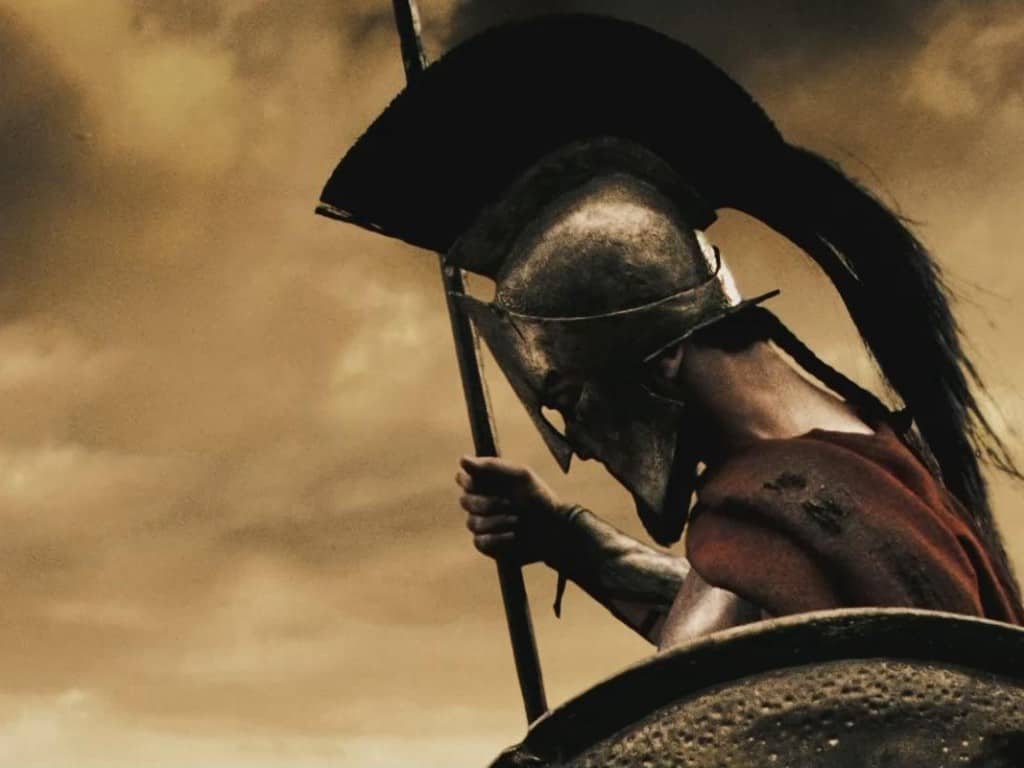
  • Are you an Athenian or Spartan Sales Warrior?

    Are you an Athenian or Spartan Sales Warrior?

    If you’ve chosen the sales warrior path, then you need to ascertain wether you’re an Athenian or a Spartan.

    “We have buried many Spartans beside the Kephisos,” said the Athenian. “Yes,” replied the Spartan, “but we have buried no Athenians beside the Eurotas.”

    The Warrior Ethos – Steven Pressfield

    This story plays out in the sales world, doesn’t it.?

    Some sales people stay at home near the Kephisos and some venture out to the Eurotas.

    The lesson I’ve taken from this (yes, I am also a Athenian sales warrior from time-to-time) is that it’s vital for us to get away from our comfort zone (the office) into our prospects’ offices.

    We may leave our prospect’s office defeated, depressed and despondent but that’s ok.

    Because as sales warriors we know that we have to spill blood to become successful in this game.

    I’ve heard that the average sales person has a 30% success rate when it comes to winning deals. So, if you see 10 prospects that means that 70% will reject your offer. Metaphorically, you’ll be buried beside the Kephisos.

    Whatever the ratio, the point is that you and I need to get in front of prospects if we want to succeed in sales.

    What are you doing to get in front of prospects. The difference between being an Athenian sales warrior or a Spartan one is vast.

    One will be successful and one probably won’t.

    You choose: Athens or Sparta?

  • True Freedom

    True Freedom

    There’s Only One True Freedom … And, You Don’t Have it

    “And dying in your beds, many years from now, would you be willin’ to trade all the days, from this day to that , for one chance, just one chance, to come back here and tell our enemies that they may take our lives, but they’ll never take … OUR FREEDOM. William Wallace (from the movie, Braveheart).

    Freedom is a core narrative in this world. It ‘s a fundamental concept in South Africa. The narrative being to be free from the tyrannical Apartheid system that enslaved millions of our fellow citizens. And, now of course, to be free of the tyrannical bonds of the sharks of state capture.

    There’s even a Freedom Charter that was adopted on 26 June 1955 at a Congress of the People in Kliptown.

    It’s a noble document with the intent to set every citizen in South Africa up for success and to give them the freedom they so deserive. The Freedom Charter has the motherhood statements to make all our hearts sing with joy: The people shall govern. All national groups shall have equal rights. The people shall share in the county’s wealth. The land shall be shared amongst those who work it. All shall be equal before the law. All shall enjoy equal human rights. There shall be work and security. The doors of learning and of culture shall be opened. There shall be houses, security and comfort. There shall be peace and friendship.

    “These freedoms we will fight for side by side, throughout our lives, until we have won our liberty.”

    I wonder how these motherhoods, as pure as their intent is, have worked out for you?

    I’d guess that freedom as a concept hasn’t really worked out for anybody on this planet. There’s always a constraint, a trade-off or an injustice.

    No man, nor woman is ever truly free when it comes to matters of this world.

    But, there is one freedom that we all have the choice to make.

    And, that’s the choice to give up our lives with grace and gratitude when the time comes.

    The rider to the deal is that the moment of our deaths are unbeknown to us.

    The only question you have to ask is that after reading this piece of text would you be ready to meet your maker … in the next instant?

    If you’re not ready … this instant, then it will be a sad state of affairs, won’t it? If your life is taken and not given, the core narrative will be regret and remorse … forever.

    Thus, the only men and women that’ are truly free are those that are prepared to die right this second and have no regrets about how they lived. They have no fear of what they will miss out on in the future because they will know that whatever they’ve been given up until the moment has been more than their due. Just to get to play for a while, they’ve been blessed beyond any conception.

    Therefore, the trick is for all of us to make the most of the moment we have right now. Let’s hug our children. Right any wrongs we may have caused. Reach out to those we have turned from. Learn, love and live fully. That’s the only way, really. That’s the only true freedom.

    Jacques de Villiers helps organisations, professional speakers, authors and entrepreneurs triumph through: sales training, motivational speaking and consulting.

  • In Sparta

    In Sparta

    In most cultures men/women can choose their career … be it an architect, lawyer, doctor, policeman or whatever.

    In Sparta there was no choice in the matter. As a newborn son, if you survived the scrutiny of the magistrates and were deemed fit, your only job for the rest of your life was to serve in the military.

    If you were judged physically unfit, you were taken to the wild gorge at Mount Taygetos, and left for the wolves. Your mother did not weep nor protest.

    This concept of ‘you only have one job’ resonates with me.

    Our ‘one job’ is to sort out our soul so that we can give up our lives with grace and gratitude when we’re called to Eden again.

    After that, being a fireman, nurse, lawyer, CEO or banker is all a bit of a sideshow.

    The only purpose of the work you and I do right now is to polish our intent so that we can become humans of moral character and fulfil our promise. Oh, and of course be in awe and gratitude to our creator for allowing us to play for a little while.

    In Sparta there were still artists, writers, architects, builders and the like. Those, however, were just secondary jobs and bonuses.

    Their real job was to protect Sparta and its citizens.

    Spartans were 100% dedicated to this goal. A Spartan mother handed her son his shield as he prepared to march off to battle. She said, “Come back with this or on it.”

    Seeking connection with our creator is the only worthwhile pursuit there is. That we create great art in the work we do is an bonus and a blessing.

    Being able to meet our creator at anytime with grace is the only real freedom we have. If we haven’t come to terms with coming back on our shield at a second’s notice, we’re not free.

    The Spartans were free. Are you?

    Jacques de Villiers helps organisations, professional speakers, authors and entrepreneurs triumph through: sales training, motivational speaking and consulting.

  • The Disillusionment Paradox

    The Disillusionment Paradox

    Imagine your 80-year-old self reflecting on how you played the game until this point. Looking back, did you achieve everything that you set out to do? Some of it? None of it?

    Did the promise life or at least GQ, Vogue and Cosmopolitan magazines make you come true?

    Did you get that perfect life? The beautiful house. The beautiful body. The perfect wife/husband. The adoring children. Two cars and three pets (two dogs and a cat).

    Did it play out well for you?

    What if the promise was never kept and not one of your hopes and dreams were fulfilled (not even the dogs and cat). Would you feel like a failure? Would you be disappointed and disillusioned?

    I would feel like a failure, wouldn’t you?

    But, what if all that you were promised came true. Even the dogs and cat were perfect. Would you feel secure, powerful, fulfilled and contented?

    Hell, yeah!

    Mmm, maybe not so much.

    The paradox is that whether you get what you want or not, you’ll always be disillusioned, disappointed and depressed.

    One day when you meet those that were given so much, ask them one and all how it worked out for them: Whitney Houston, Phillip Seymour Hoffman, Michael Jackson, Amy Winehouse, Heath Ledger, Robin Williams, Bernie Madoff et alia.

    Ask your average billionaire next door how things are working out – the 10-bedroomed house, the trophy husband, the yacht and the Lamborghini. When life happens – illness, infidelity, infertility, indigestion, ingratitude and infrequent intercourse – all the glitter and gold loses its shine, doesn’t it?

    We’re mostly in a state of dissatisfaction and disillusionment where all we want to do is trade in, trade up or trade out, don’t we?

    If family, friends, fame, Fendi, Ferrari and favour can’t do the trick, what can?

    Focusing on the process of living this life and not the outcome is one way to make it count.

    Because the outcome, whether you get it or not is always dissatisfactory. It never quite plays out how you thought it would. It never scratches the itch called insecurity.

    Focus on the moment. Focus in the moment. Make what you do in this moment count. It’s art.

    It’s process

    It’s what is called life.

    It’s perfect.

    Jacques de Villiers helps organisations, professional speakers, authors and entrepreneurs triumph through: sales training, motivational speaking and consulting.

  • The Shallows

    The Shallows

    I was at the beach a couple of weeks ago. When I swam I stayed in the shallows.

    Every now and again, I’d spot a small fish or some sea shells.

    It was pleasant enough. But after a while I got bored. Seriously, one can only body surf for so much.

    When I’m at the sea, I always want swim deeper and further out. I never do. The bottom line is that I’m scared. I’m not a great swimmer and I’ve seen Jaws.

    This means when it comes to the sea, I’ll pretty much always wallow in the shallows and never venture out to unknown adventure.

    I worry that I conduct my life the same way.

    I stay in the shallow, safe and superficial world. This limits my experience to the house I live in, the neighbourhood I stay in, the stores I shop at and the people I hang out with.

    I strive for things that I can see – houses, cars, food and friends.

    If I had the courage to don a wet suit and scuba tank, I could go deeper into the sea and discover the many beautiful and astounding creatures that are hidden from me.

    I could have a fuller and richer experience.

    I know the same is true for me when I go deeper into myself. When I try and connect with my soul my experiences are more fulfilling.

    But, if I go too deep, I get scared of what I might find. I’m scared that the demons and angels will give me the answers I seek so that I actually have to man up and do the work in front of me. That, of course is getting to my final destination in good shape through the experiences of now.

    I’m not brave enough to take charge and be really happy. I then leave the depths and come back to the shallows where I feel safe. Where I think I have some semblance of control.

    But the shallows are a deceptively dangerous place to be. A shark can take me in a couple of feet of water, blue bottles can sting me and shells can cut me.

    The same goes for thinking that I can remain a surface dweller, safe and sound in a world that’s familiar to me.

    Dangers lurk there too. You know it and I know it.

    There are risks associated with both staying in the shallows and going deep.

    Staying in the shallows stops me from having a rich, full experience of this gift that I have been given … life.

    Going inward and deeper has the potential to free me to become a creature of grace and gratitude.

    But, it’s hard to be free because I’m used to being a slave. I’m used to pandering to the whims of my many masters so that they can feed me the scraps from the table.
    It’s the safer option … being a slave. The harder option is being free but potentially starving to death.

    But, what if I’m free and I thrive? What would that mean?

    I have faith that if I go deep and set myself free, there’s no way I’ll starve. I’ll have abundance and way more than is my due.

    Let’s go swim, you and I. Let’s go deep.

    Jacques de Villiers helps organisations, professional speakers, authors and entrepreneurs triumph through: sales training, motivational speaking and consulting.