Category: Personal Observations

  • The Ghost Who Learned To See

    The Ghost Who Learned To See

    Just this Saturday evening, at a friend’s dinner party, it happened again.
    I turned into a ghost.

    I was mid-sentence — telling someone something mildly interesting — when a woman slipped into the space between us and began a fresh conversation with him. No apology. No glance. No flicker of awareness that I had existed in that moment.

    So I did what ghosts do.
    I vanished. I walked to the drinks table, poured myself a stiff whisky, and faded from the room. Neither of them noticed I was gone.

    It’s an old pattern by now.
    Insert. Interrupt. Ignore.
    A quiet haunting.

    The Different Faces of the Same Ghost

    You may know this feeling.

    I cook. I clean. I wash. I work. I pick up. I drop off. I love. I shout. I scream.
    They don’t hear me.
    They don’t see me.
    I’m a mother. I’m a ghost.

    I fix things. I work. I carry. I pay. I love.
    I shout. I scream.
    They don’t hear me.
    They don’t see me.
    I’m a father. I’m a ghost.

    I stand at the corner. I hold a sign. I smile when I can.
    I am hungry. I am tired. I am human.
    But cars look through me.
    I’m a beggar. I’m a ghost.

    I study. I eat. I stay in my room. I try to belong.
    No one calls my name.
    I scroll, but I am never tagged.
    I’m a child. I’m a ghost.

    I’m restless. I’m needy. I’m unfulfilled. I’m weak. I’m powerless. I’m in pain.
    I want to be loved. I want to love. I’m lost. I’m lonely. I’m alone.
    Please, someone, notice me.
    I’m human. I’m a ghost.

    What a Ghost Really Is

    A ghost is not dead.
    A ghost is unseen.

    A ghost lives in the silent gap between what we do
    and what the world remembers.

    If you have ever felt lost, unappreciated, unloved, shamed, afraid, unfulfilled, regretful, guilty, disappointed, fractured — then you already know what a ghost feels like.

    It wanders through expectations, rattling chains of “Why didn’t they notice?” and “When will it be my turn?”

    It can’t leave.
    It can’t rest.
    It waits for an apology that never comes.

    The Moment of Release

    A ghost is freed the moment it understands:

    The world owes it nothing.

    Not love.
    Not applause.
    Not understanding.

    Children owe nothing.
    Parents owe nothing.
    Spouses, bosses, strangers — owe nothing.

    And this is not bleak.
    This is the beginning.

    Because once the ghost stops tallying what wasn’t given,
    it can begin offering what it always wanted:

    Appreciation.
    Awe.
    Attention.
    Compassion.
    Love.

    The ghost is released the moment it chooses to see, instead of waiting to be seen.

    Becoming Human Again

    Peace is not found in being noticed.
    Peace is found in noticing.

    In saying:
    “I see you. Even if you don’t see me.”
    “I hear you. Even if you never hear my name.”
    “I will not haunt this life. I will inhabit it.”

    Hello, my name is Jacques.

    I see you.
    I hear you.
    I feel you.

    Would you like to have an (uninterrupted) conversation?

  • Beyond the Mask: Where Realness Lives

    Beyond the Mask: Where Realness Lives

    When someone tells me they’re “authentic,” I flinch. Because the moment you have to say it… something’s already off.


    Authenticity isn’t something you declare; it’s something people sense.
    You don’t convince others you’re real by announcing it — you show it through consistent, quiet alignment between what you say and what you do.

    It’s like someone saying, “Trust me.” The instant you have to ask for it, the trust starts to wobble.
    Or someone declaring, “I’m humble.” The claim undermines the quality it’s trying to prove.

    When people are authentic, they don’t need to market it. Their presence speaks louder than their claims. It shows up in the way they listen. The way they treat others when no one’s watching. The way their story matches their behaviour — without a press release.

    So when someone leads with “I’m authentic,” it’s often a sign they’re managing perception, not living truth. They’re polishing the mask instead of setting it down.

    Beyond The Mask Is Where Realness Lives


    We talk about authenticity as if it’s buried treasure.
    Something hidden deep inside, waiting to be uncovered, polished, and displayed.

    “Be true to yourself,” the culture says.
    But which “self” are we talking about?

    The one shaped by family, culture, and inherited stories?
    That self is useful—it gives us a name, a role, a place.
    But it’s also a mask. Crafted, layered, and often worn without question.

    The mistake is believing authenticity means doubling down on the mask.
    Louder self-expression. Sharper edges. More performance.

    But what if real authenticity isn’t about reinforcing the story…
    …it’s about stepping beyond it?

    Beneath the cultural paint and personal branding lies something universal:
    a shared humanness that doesn’t need applause.
    When we act from that space, our words stop performing. Our actions stop calculating.
    We start connecting.

    Authenticity isn’t shouting “This is who I am!”
    It’s showing up in a way that reminds others of who they are too.

    Constructing authenticity isn’t about building a better mask.
    It’s about learning to set it aside.
    That’s where trust is built.
    That’s where tribes form.
    That’s where realness lives.

    The mask can be beautiful. But it’s not the point.

    And here’s the uncomfortable truth:


    Authenticity on its own isn’t inherently good.

    Think about Hitler or even today’s crop of leaders that are spiralling us into a world of hurt.  They’re authentic.
    They aren’t pretending; the act in full alignment with their beliefs.
    They are consistent, unapologetic, and “true to themselves.”

    But authenticity without empathy is dangerous.
    It can amplify ego, ideology, and cruelty. Ain’t that the truth in today’s zeitgeist?

    We often romanticise authenticity, as if “being real” is the highest form of leadership.
    But a leader can be authentically wrong, divisive, or reckless.

    Authenticity simply means they’re not pretending.
    And if what they bring is fear, short-term thinking, or chaos, authenticity doesn’t redeem it—it accelerates it.

    That’s why real authenticity must be paired with transcendence:
    a deliberate step beyond the mask and into shared humanity.

    Here’s another uncomfortable truth:

    When someone says they’re “authentic” or “striving to be authentic,” it’s a red flag.

    Because authenticity isn’t a word—it’s quiet action.
    People feel it in the alignment between your words and deeds.
    They notice it in the spaces where you don’t perform.


    The moment someone starts advertising their authenticity, there’s a danger that what follows is performance, not presence.

    Real authenticity whispers. It doesn’t need a microphone.

    Where have you seen authenticity become performance?

  • Bosses Gone Bad

    Bosses Gone Bad

    Jacques de Villiers – writing quest: Article 52/365

    There’s been a narrative going around for as long as I can remember that employees leave bosses not companies. 

    The blame is placed squarely on the leaders’ shoulders.

    A 2019 DDI study found that 57% of employees have quit because of their boss and 37% have thought about leaving because of their manager.

    “There are three kinds of lies: lies, damned lies, and statistics.”

    The late Benjamin Disraeli, former British Prime Minister

    I don’t think this is the whole story, and that one can’t point a finger at only leaders.

    The employee (the victim) and the company (perpetrator)  have to take some responsibility too. 

    You can’t blame everything on your leaders. 

    What the studies don’t tell you is the calibre of employees that were interviewed. Perhaps they weren’t performing and as is typical in human nature, they blamed something/one else for their shortcoming? It’s easy to say that it’s the manager’s fault. Perhaps they left before they were about to be fired for not doing their job? Perhaps they were the malevolent rotten apples that should never have been hired in the first place. 

    You can’t turn shit into steel. I’ve led teams in the military and corporate settings. I’ve seen employees behaving unethically. I recently wrote about employees who lie about being sick and take all their sick leave. It’s probably not politically correct to say, but any employee spending time on personal social media during work hours is technically stealing. Remember in the ‘old days’, it was the equivalent of playing solitaire on your computer. But, if we use this as a yardstick, then the lot of us are guilty.  

    Leaders often encounter employees who try to take as much as they can from the organisation without contributing much towards its goals. One can hardly expect a manager to develop a weak character into something of value.  Dealing with employees who lack motivation and a strong work ethic can be challenging, and downright demotivating.

    I challenge any leader reading this article who has had an employee that isn’t pulling his weight, and hasn’t thought, “F&*k this, I just want to fire his ass.”

    Is it possible for leaders to improve? Of course. From a communication and function role, this is easy.

    Is it possible for employees to improve? Of course. They can go from a rights-based mindset (taking as much as they can from the organisation that’s feeding them) to a duties-based mindset (giving more than they get).

    And, I don’t even think this is an issue of poor leadership or morally bankrupt employees. It’s a human issue.

    There are only two ways to deal in this world. We’re either here to get or to give. The more immature and selfish we are, the more we take. The more mature and selfless we are, the more we give. And, that’s really the crux of it, isn’t it? There are two camps: the takers and the givers.

    I disappear so that others can appear.

    Sufi Saying

    Also, it may not be a leadership issue, but rather a company culture issue. Most companies still view employees as resources to get a result (it’s taught at every business school). So they take as much as they can from the employee, leaving them burnt out. So, leaders are basically Oberleutnants following the Fuhrer’s orders (culture).

    Let’s take this from a human, metaphysical and spiritual angle. Why do we attract ‘bad’ bosses, ‘kak employees’ and ‘crap cultures’ to ourselves? It’s purely a function of our vibration and mindset. 

    1. It’s not you, it’s me. If you look at the Krebs Drama Triangle https://jo.my/aq58rv. Victims will always attract perpetrators (‘bad’ bosses). When I worked in corporations, every boss I had was wonderful. But that’s because I wear rose-tinted glasses and have a positive view of the world. The world just mirrors what you put out there.

    2. Welcome the ‘bad’ boss, he or she may be the best lesson you ever received. Petty Tyrants drive one to distraction. My first boss was a hardened journalist and treated me and my writing like I was a two-year-old with a crayon. He had me in tears more often than I cared for. But, he was a genius. I sucked it up and learned everything I could from him. He turned me into the writer I am today. Etsko Schuitema wrote a great piece on Petty Tyrants https://jo.my/eaqnd3.

    3. Hurt people hurt people. According to the Map of Consciousness https://jo.my/1tglvb, 85% of humanity has a  frequency under 200 hz (shame, guilt, apathy, grief, fear, desire, anger and pride). If both the boss and the employee are coming from this state, it’s not going to work out at all.

  • Constraint is the ultimate freedom

    Constraint is the ultimate freedom

    Jacques de Villiers – writing quest: Article 51/365

    You’ve probably heard the expression, ‘think outside the box’. That’s a bit of a stretch for most of us because we can’t even think inside the box, and when there’s no box, we can’t think at all. 

    Constraint has a negative connotation, implying limitation and restriction. There’s nothing we value more than freedom. We seek not to be fettered by customs, rules and laws.

    I play in the spiritual and metaphysical realm, where it is common to believe in concepts like “letting go,” “going with the flow,” “everything happens for a reason,” “submitting and surrendering,” “let go, let God” “meditating,” “praying,” and “manifesting.”

    There’s a sense of the unfettered and of freedom.

    We admire those that can colour outside the lines, think outside the box and break with convention. However, even the most unconventional are constrained by immutable laws, without which even they couldn’t function. 

    Constraints provide us with a clear sense of direction. And, that direction can lead us to the freedom we so value.

    Even the most enlightened, past and present, are constrained and work to a set of rules. Prayer has rules, meditation has rules and sitting like a guru on the mountaintop holding the light for the world has rules. 

    When I have the freedom to draw anything on a blank canvas, I find it difficult because there are too many options. I become paralysed because I don’t know in which direction to go. 

    If you’ve ever gone to a restaurant where the menu has hundreds of choices, you’ll know what I mean. It takes much longer to make a choice. But when you go to a restaurant that has five items on the menu, it takes a lot quicker to make a choice, doesn’t it?

    Sometimes the world seems rudderless, chaotic and broken. But if we look carefully, we’ll see that there’s an unfathomable intelligence and divine direction in literally everything that happens. 

    And, if you treat life as a game, which it is, then knowing the rules can help you win the game. 

    Constraints are not the enemy of freedom. Freedom is the enemy of freedom.

    If you don’t believe me, let’s ask the moon to untether itself from our earth. We’d become unmoored and free of the constraint, and that would be downright disastrous.

    There’s no freedom without form. And, there’s no form without constraints.

  • How to Start A Cult

    How to Start A Cult

    Jacques de Villiers – writing quest: Article 49/365

    Millions of people believe that Charles Darwin coined the phrase, “survival of the fittest.” It was actually philosopher Herbet Spencer who coined it five years after reading Darwin’s Origin of Species.

    What Darwin actually said was, “It is not the strongest of the species that survives, nor the most intelligent that survives. It is the one that is most adaptable to change.”

    So here we have two versions of the same concept, one based on truth and the other based on a falsehood.

    Stephen Covey said, “If the ladder is not leaning against the right wall, every step we take just gets us to the wrong place faster.”

    Here’s the thing: many, if not all of us, base our entire value system on a false premise and spend our lives defending it.

    If you agree with ‘survival of the fittest’, you’ll see life as a competition and try to keep as many resources for yourself as possible.

    Someone like me might come along and take the ‘adaptable to change’ philosophy and add my own spin to it. Let’s say, “Those that are most adaptable to change and co-operate with one another survive.”

    That’s not what Darwin said. But that’s my spin: co-operation. I go out and sell that, and if enough people buy into it, I’ve started a movement. Let’s call it the Co-operation Cult. But, it’s based on a false premise.

    Look at the world today, it’s full of war (we are right). Every act of violence is based on the false premise that it is justifiable to take a life, making murderers of all who buy into that world-view. It looks like Herbert Spencer has won the day with his ‘survival of the fittest’ statement.

    The trick is not to take a sentence in isolation and turn that into one’s world-view. In a sound bite world, it’s easy to do that, isn’t it, and swear it’s gospel?

    Talking about gospel. Here are two contradictory versions from the same author.

    Matthew 19:24: “I’ll say it again-it is easier for a camel to go through the eye of a needle than for a rich person to enter the Kingdom of God!”

    Matthew 25:29: “For to everyone who has, more will be given, and he will have abundance; but from him who does not have, even what he has will be taken away.”

    This has split the Christian movement into two distinct camps. One that believes that poverty, suffering and charity are the way to redemption.

    And, the other (charismatic movement) preaches prosperity theology where financial blessings are always the will of God.

    Who’s right? Confusing, isn’t it?

    If I were mischievous, I’d say that all religions belong to the Cult of Confusion. They’re there to keep us on the back foot, playing on our shame, apathy, guilt, grief, pride and then throwing in a sprinkle of hope to keep us going just a little longer (and, to stop us from killing ourselves out of hopelessness). Someone has to keep the church, synagogue and mosque lights on, after all.

    Good grief, I’m cynical this morning.

    What’s the trick? Don’t take anything in isolation (a sentence) and turn it into an unwavering belief. Look at the whole picture. Use your intellect and become more discerning about what you believe. Be courageous and interrogate your beliefs (stories that have been told to you by people that are more confused than you). And, if they no longer serve you, drop them.

    As always, I go to my man-crush, Carlos Castaneda: “Anything is one of a million paths. Therefore, you must always keep in mind that a path is only a path; if you feel you should not follow it, you must not stay with it under any conditions. Only then will you know that any path is only a path and there is no affront, to oneself or to others, in dropping it if that is what your heart tells you to do.” 

    I belong to the Cult of Castaneda. And, for as long as I can remember, I believed that he really did spend time with a Yaqui shaman called Don Juan. By all accounts, this is a falsehood, and he used the character of Don Juan to spread his philosophy. 

    There’s a piece of me that believes that he did actually spend time in Sonora, Mexico with the shaman. 

    Like there’s a piece of me that believes in Ayn Rand’s objectivism philosophy where man is a heroic being, with his own happiness as the moral purpose of his life, with productive achievement as his noblest activity, and reason as his only absolute. 

    Like there’s a piece of me that believes that there’s an unfathomable consciousness that allows you and me to play here for a brief time.

    Like there’s a piece of me that believes that the Annunaki are real and that the Pleides (الثريا) are the star seed beings watching over us.

    I clearly belong to the Cult of Confusion. All I know is that reality is not what it seems and that we can’t deal in absolutes, because there are none. If anything, at least I could probably hold an interesting conversation.

    But one thing I’ll go to the grave believing is that gratitude and love are all we need. Now that’s a cult I can get behind.

    Oh, and be circumspect of everything I have said in this text. I am, after all, the product of millions of falsehoods that I’ve chosen to believe. Just believe yourself. Your heart will tell you what’s right.

  • The Nuance Behind Tomato Sauce

    The Nuance Behind Tomato Sauce

    Jacques de Villiers – writing quest: Article 45/365

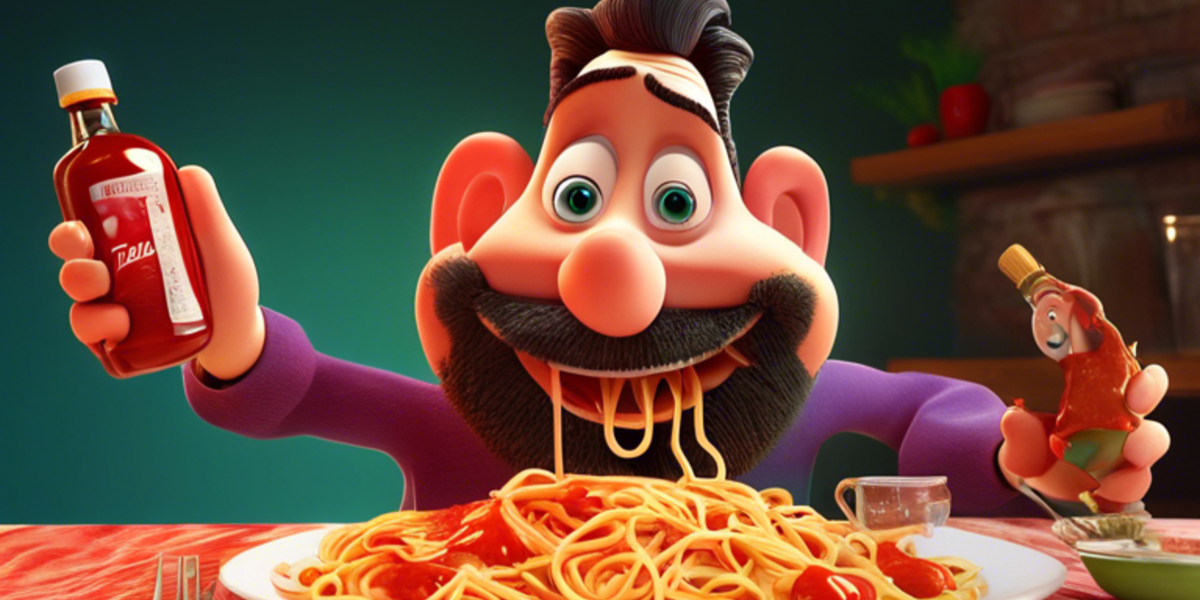
    I remember my first trip to Italy and the amazing food. I battled with the food at first. For decades, I ruined my taste buds with all the sauces I put on my food like tomato sauce, Tabasco, and chilly sauce.

    I was used to * All Gold Tomato Sauce and its ’36 tomatoes in a bottle’. Not freshly crushed tomatoes in a bowl.

    Initially, the food tasted bland, and I was always reaching for the salt. After a week my taste buds became attuned to the nuance of the food, and a whole new world of flavour opened up to me. 

    Perhaps we ‘tomato sauce’ our own lives. We hide our feelings by using things like alcohol, drugs, sex, binge-watching Netflix, and similar activities.

    We’re trying to suppress and repress the *goggas so that we don’t have to deal with them. You’re smart enough to know that doesn’t work. They’re going to surface somewhere, and when you least expect them. 

    If you’ve ever felt negative emotions like being passive-aggressive, intolerant, unkind, shamed, shaming, depressed, complaining, apathetic, guilty, angry, and sorry for yourself, those are the goggas. 

    In my experience, I’ve found that if I bring any negative feeling into the open and observe it without judgement, it eventually dissipates. Sometimes quickly and sometimes I wrestle with something for weeks.  And, mostly, for me, it’s hard. I’m so tempted to avoid anything unpleasant that I want to desperately ‘tomato sauce’ it. 

    When the negative things disappear I become lighter (light).

    And, of course, when my taste buds are more attuned to nuances and subtleties, things just taste better. And, this leads to gratitude and awe. I am more attuned to noticing the miracles in and around me. It’s heady and delicious. 

    How does one play in the world of nuance and bring out the magnificent flavour that is this life? 

    The only way I know how to do it is through meditation. It’s in the stillness that my consciousness calibrates, my gratitude grows, and my awe awakens.

    Join me on this adventure from unconsciousness to consciousness using the Map of Consciousness. Let’s figure this out together, you and I.

    * For my international readers – goggas is the Afrikaans colloquialism for insects. And, tomato sauce is ketchup.

  • Are Believers Healthier Than Atheists?

    Are Believers Healthier Than Atheists?

    Jacques de Villiers – writing quest: Article 38/365

    Apparently, people with strong spiritual beliefs have better mental health and adapt more quickly to health problems compared to those with weak spiritual beliefs.

    There are, of course, many other considerations like lifestyle choices and genetics to take into account. I know the grumpiest and most negative of atheists that live to a ripe old age.

    However, death is the great equaliser. And whether we are believers or atheists, to some extent we fear it. 

    “In a world where death is the hunter, my friend, there is no time for regrets or doubts. There is only time for decisions.”

    Carlos Castaneda

    Spiritually conscious people in part have hope which is an alternative to our innate fear of death.

    As a child I felt a great sense of loss when our six Labrador puppies drowned in our swimming pool. It was my first real taste of mortality. I realised that my parents would one day die, and be gone forever. That filled me with deep sadness. When I realised that I would one day be gone too, I was left in a state of terror. 

    When I was six, I stumbled upon the answer: Die before you die. Of course, you’re smart enough to know there’s no way I ‘stumbled’ onto the answer. It was revealed to me. 

    Many spiritual teachers and philosophers advocate for dying before you die. 

    For six months, I would return home from my Sub A class at Zonnekus Primary School in Milnerton. I would close the curtains of my room, get into bed, and pray to die. At that time I was proximate and intimate with death. 

    I can’t fathom the reason for this. Perhaps, I knew that this life of mine wouldn’t be easy, and I wanted the coward’s way out so that I didn’t have to face it. Or perhaps the demon that had assailed me when I was two had come back. The exorcist thought not and the psychologist just said I was channelling Jung.

    Even at that young age, contemplating the end of my life led me to deep introspection, growth and joy. I came out of the experience changed. I would say my spiritual journey started then. I believed in an afterlife or a forever-life since the soul is permanent.

    “Death is very likely the single best invention of life. It is life’s change agent. It clears out the old to make way for the new.”

    Steve Jobs

    So whether we are a believer or an atheist, once we lose the fear of death, things shift for us. Believing in an afterlife, whether real or not, can bring us a sense of well-being and peace.

    If you find the idea of an afterlife and ever-life hard to believe, then believing that your purpose is to make a difference should bring you a feeling of well-being and peace.

    “Without death, life would be meaningless. To be, and to enjoy your being, you need death, and limitation enables you to fulfil your being.”

    Carl Jung

    I think that all of us should have the experience of dying before we die so that we can appreciate this extraordinary life that we have now. What do you think?

  • I Wish I Had A Catherine Dickens In My Life

    I Wish I Had A Catherine Dickens In My Life

    Jacques de Villiers – writing quest: Article 35/365

    Whenever Charles Dickens, the author, wrote scathing letters to those who he perceived to have offended him, Catherine, his wife, would always take them to the post office. She never posted them. And, saved him from a world of hurt. 

    I don’t have a Catherine, so here goes …

    Cut. Cut. Cut.

    That’s how I started writing the article I was going to send out today.

    It was going to be a Jannie Jammergat (Sad Sack) piece calling people out who I perceived to have offended me. I probably would have lost friends, and I can’t afford to lose any more.

    As you know, the universe always works for my (and your) good. 

    I got a phone call from one of my dearest friends. I read some of the article to him, and he said, “What do you hope to gain from this? And, is it the best use of your energy right now?” 

    Thank you universe for channelling Catherine Dickens right at the moment I needed her. 

    How often have you reacted instead of responding to a situation? It happens to me more often than I care to admit.

    When we’re reacting we are running an unconscious programme, probably from childhood. We often react without thinking (unconscious). I know when I react it’s because I’m hurt. You know the old saying, ‘hurt people hurt people’. 

    Give me the child, and I’ll give you the man.

    Francis of Assisi

    Of course, a better way to react to a perceived slight is to respond. This is called being conscious. And, it buys you a second or two so that you can respond appropriately. I’ve often found that the best response is no response.

    Think about it: what weakens us is feeling offended by the deeds and misdeeds of our fellow men. Our self-importance requires that we spend most of our lives offended by someone. Only as a warrior can one withstand the path of knowledge. A warrior cannot complain or regret anything.

    Carlos Castaneda

    It’s becoming apparent to me that whatever is offered to me is a gift even though it doesn’t always feel like it at the time.

    The way I generally handle a perceived slight these days is to pause and think, “Mmm, that was eina. Thank you for bringing it to my attention. I wonder why this has triggered me? It needs further investigation. Yay, it’s another opportunity for me to let go of something that’s holding me back. 

    I then open my heart to the person who has gifted me with this insight and thank them.

    Everything that irritates us about others can lead us to an understanding of ourselves. Your visions will become clear only when you can look into your own heart. Who looks outside, dreams; who looks inside, awakes. Until you make the unconscious conscious, it will direct your life, and you will call it fate.

    Carl Jung

    Jung’s right, of course, until you make the unconscious conscious, it will direct your life. 

    Let’s become conscious, you and I. It’s the best response to anything life throws at us.

  • The night I turned into a ghost

    The night I turned into a ghost

    Jacques de Villiers – writing quest: Article 34/365

    Just this Saturday evening I was at a friend’s dinner party when it happened again. I turned into a ghost.

    I was telling someone something mildly interesting when a woman inserted herself into the conversation and with nary a blink, started talking to the person. I exited the conversation and poured myself a stiff drink. Neither noticed that I’d left.

    It’s not the first time this theme has played itself out for me. It’s been an all too regular occurrence: insert, interrupt, ignore.

    I get paid to talk to people, but in social situations, I struggle to have conversations for free.

    I’m convinced that I’m interesting. I get asked to be a +1 at many functions because I can handle myself well in a social setting. I know I’m a marvellous specimen to look at, but it can’t just be that surely? I must be mildly interesting too?

    Do you sometimes feel invisible, unheard and unseen? Do you feel like you’re a ghost?

    I cook. I clean. I wash. I work. I pick up. I drop off. I love. I shout. I scream. They don’t hear me. They don’t see me. I’m alone. I’m a mother. I’m a ghost.

    I fix things. I work. I pick up. I drop off. I love. I shout. I scream. They don’t hear me. They don’t see me. I’m lonely. I’m a father. I’m a ghost.

    I stand on the street corner. I work. I wave my sign. I smile. I look frail. I’m hungry. I’m lonely. I’m hurt. I love. I shout. I scream. Why don’t they see me? Why don’t they hear me? I’m a beggar. I’m a ghost.

    I study. I eat. I stay in my room. I do chores. I love. I’m lonely. I try to fit in. I don’t fit in. Why am I invisible? I shout. I scream. I’m a son. I’m a daughter. I’m a child. I’m a ghost.

    I’m restless. I’m needy. I’m unfulfilled. I’m weak. I’m powerless. I’m in pain. I want to be loved. I want to love. I’m lost. I’m lonely. I’m alone. Please, someone, notice me. I’m human. I’m a ghost.

    If you have ever felt lost, unappreciated, unloved, shamed, apathetic, fearful, unfulfilled, regretful, guilty, dissatisfied, disjointed, fractured, or disappointed, then you know what a ghost feels like.

    It can’t find peace and leave this place because it’s stuck in a pit of self-pity, a river of regret, and a desert of depression.

    It’ll only be released to blessed peace and the bosom of mother Eden when it lets go of its expectations of how the world should be.

    If it expects the world to appreciate, love, and be grateful for its existence, it will be stuck in eternal regret, dissatisfaction, and disappointment.

    The ghost can only find solace when it realises that the world owes it nothing. Its children owe it nothing. Its boss doesn’t owe it anything. Its employees do not owe it anything. Its spouse does not owe it anything. The planet owes it nothing.

    It will only find peace and move on when it realises that it owes everything – appreciation, happiness, awe, gratitude and love to the world and those that rent space in it.

    We should make peace with the world as it is now and make peace with our role in it. The consequences and regret of not doing so will last for an eternity. The ghost will be released into joy only when it accepts things as they are and surrenders with grace.

    “Hello, my name is Jacques. I see you. I hear you. I feel you. Would you like to have a (uninterrupted) conversation?”

  • The Fuckening

    The Fuckening

    Jacques de Villierswriting quest: Article 30/365

    I found a beautiful Facebook post by My Little Witch that talks about how we create (spell) our reality.

    The Fuckening

    When your day is going too well, and you don’t trust it and some shit finally goes down.

    Ah, there it is, the fuckening. 

    I don’t know about you, but I sometimes snatch defeat from the jaws of victory. I’ve caught myself thinking things like:

    • This is too good to be true. (When it comes to investments hidden as Ponzi schemes, it probably is too good to be true). 
    • Bad things happen in threes.
    • This will never last.
    • It was just a fluke (when you speak universe, you know there is no such thing as a fluke).

    Have you ever had a ‘well-meaning’ friend put the above thoughts into your head? Don’t you just want to scream when they jinx things? 

    • When you’re in a new relationship, “Be careful, you know how you got hurt last time.” Thanks for that, I wasn’t thinking that until you said it. Now why don’t I create that self-fulfilling prophecy for myself?
    • When you get a new car, “It’s lovely. Wow, your insurance must be expensive. The fuel as well.” That didn’t occur to me, but thanks for sucking the fun out of my experience.

    I shared an incident that happened to me on the Noordhoek beach with a friend.

    I told my friend that I’d met a woman on the way to the car park from the beach, and we got chatting. I stubbed my toe on a rock on the way. My friend said, “Oh, what are you not trusting?” Clearly she’s a toe whisperer. I was more Freud about it, “Sometimes a cigar is just a cigar.” The woman was beautiful, and I was admiring her and not watching where I was going. More clumsy and distracted than ‘not trusting’, I thought. But I humoured her because when it comes to things spiritual and assigning meaning to things, she’s really smart.

    I pondered about my trust issues that day. Phew, that opened a can of worms which I believe carried into the next day.

    I used to walk up Chapman’s Peak every morning and down a well-trodden path through Monkey Valley to the beach. I’d walked that path every day for nearly 10 months without mishap. I’m still pondering my trust issues and found myself focusing on not falling. I stepped on a rock that I’d stepped on hundreds of times with no incident. I fell, and my knee got cut. What the fuckening?

    I phoned her and told her what had happened. She said, “Oh, why are you so inflexible? You must absolutely explore that!” Not only is she the toe whisperer, but the knee whisperer as well.

    I’m thinking, fuckening that. It’s bad enough having trust issues, now I have to explore my inflexibility too. I don’t think so.   

    She then said, “Watch out, bad things happen in threes.”

    Fuckening that, I’m not going for a swim like I normally do. I know that shark is waiting just for me.