Blog

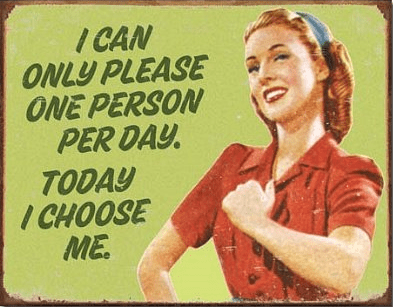
  • Be Selfish and don’t feel guilt about it

    Be Selfish and don’t feel guilt about it

    Do you ever feel guilty when you’re selfish? You know, when you do something just for you?

    I did.

    If I wasn’t putting my family first, going to bat for my clients 100% and slaving away to make sure that everyone in my ecosystem was ok, then I felt guilty.

    This was up until I came to the concept of selfishness through an Irishman called Philip McKernan who runs an intervention called Authentic Goal Setting.

    He asked one of his clients what he liked doing. After some time and prompting, the client finally admitted that he liked yachting. But that he didn’t do it anymore.

    McKernan asked him if his family minded when he spent time on the yacht. His answer was illuminating. He claimed that there was more harmony in the house because he was in a better mood.

    He felt more relaxed, invigorated and centred after a session of yachting. He enjoyed his family more and they him.

    McKernan then berated him. He said that he was selfish by not going yachting.

    Surely, if it put him in a better mood, made him a better father, a better husband, a better person … surely that’s a good thing?

    And, for me that’s the ‘aha moment’. If we give everything to others and leave nothing for ourselves, then we are doomed to be unhappy. And, if we make ourselves unhappy, that’s just being selfish, isn’t it?

    Because when we’re happy, it rubs off on those we love and they become happy. So, it’s a win-win all round.

    The bottom line is that we need ‘me’ time.

    I’ve met so many couples that may as well be joined at the hip because they do everything together. It is almost as if one can’t function without the other, they’re so co-dependent. They become ‘us’ but lose their individual identity in the process.

    One of our biggest drivers is the need for significance.

    In a relationship environment there’s a lot of ‘us’ and very little ‘me’.

    We’ve been brainwashed that if we spend ‘me’ time, we’re being selfish.

    But if you buy into McKernan’s concept of selfishness, then being ‘selfish’ is not a bad thing, is it?

    Be a bit selfish. Do something that you love. Go fishing. Read a book. Yacht. Have a facial. Hang out with friends. Meditate. Go to gym. Run. Collect stamps. Bake. Hike. Sit. Breathe.

    Whatever it is that inspires you, go on, do it. Be selfish and take some ‘me’ time.

    What’s the worst that can happen? You may feel happier. Lighter. More centred. Grateful. You may just become a better mommy, daddy, son, daughter, grandfather, grandmother, employee, employer … that can’t ever be a bad thing, can it?

    Connect with you next week … I’m off to spend an hour or so at the lake with my fishing rod and maybe catch a Bass or two. And, if I don’t … so what? I’m connecting with me and being selfish.


  • We stand on the shoulders of giants

    We stand on the shoulders of giants

    I’m sure you know that Cecil John Rhode’s statue was recently removed from the Cape Town University because of a whole bunch of issues including being a colonialist and messing up everyone’s lives. And, it looks like the activists have their eyes on Paul Kruger’s statue too.

    I don’t want to get into they why’s and wherefores of the debate because it is not germane to the point I want to make.

    Maybe there’s another view. It doesn’t matter what tribe you belong to, but in one form or another, it tried to colonise and subjugate someone – British, Germans, Zulus, Afrikaners, Spanish, Viking, Hun, Americans and the like.

    Understand that becoming human is an iterative process and yes, massive mistakes have been made along the way and are still going to be made along the way.

    But we are all here and benefiting from all those that have come before us. We are standing on the shoulders of giants.

    Let’s take Britain for example. It’s cool to bash them, isn’t it? The Afrikaner tribe for the atrocities in the Boer War and other tribes for colonising them. But, think about the British inventions that we all benefit from today (and, this is just a handful):

    1. The first telephone – Alexander Graham Bell
    2. The first steam locomotive – Richard Trevithick
    3. The first television – John Logie Baird
    4. World Wide Web – Tim Berners-Lee
    5. The first programmable computer – Charles Babbage
    6. Sports we enjoy in South Africa – football, cricket, rugby and tennis
    7. The light bulb – Joseph Swan (yup he beat Edison to it)
    8. Hypodermic syringe – Alexander Wood
    9. Synthetic dye – William Perkin
    10. Toothbrush – William Addis
    11. Safety bicycle – John Kemp Starley
    12. Cement – Joseph Aspdin
    13. Stainless Steel – Harry Brearley
    14. Photography – William Henry Fox Talbot
    15. Sewage System – Joseph Bazalgette
    16. Tin can – Peter Durand

    If you go back in the annals of history, you’ll find that pretty much every tribe in this world has contributed something that we are benefiting from.


  • Employee Engagement: What if Hollywood Doesn’t Call?

    Employee Engagement: What if Hollywood Doesn’t Call?

    In my line of work employee engagement is a big deal. And, the question on every leader’s lips is, “How do I get my people to come to work for more than a paycheque”. Leaders are struggling with and failing to figure out how to get their employees to come to work for something bigger than themselves.

    One of the biggest mindset challenges I see with employees on a daily basis, is folks who have Hollywood jobs.

    Let’s use Hollywood as a metaphor. Many aspiring actors end up in Hollywood hoping to make it as a star. Like Charlise Theron from our own shores. She made it big time.

    Of course, stardom doesn’t just arrive (in fact, for most, it never does) so the aspirant has to find a job. “But, it’s only temporary, you understand, because I’m going to become a star”.

    So, the aspirant ends up working as a waiter, barman, barista, exotic dancer and the like.

    Sadly, probably in more than 90% of the cases, Hollywood doesn’t call and they either stay in their current jobs, depressed and defeated or they go back home.

    I’m of the opinion that many of us are just like the aspiring actors we see going to Hollywood.

    You see, we think the job we’re in is not our real job. No, our real job is out there. This one is temporary. When my agent calls I will become a star.

    So, what’s the danger of that? Well it means that we don’t focus on the work in front of us and we don’t give our 100% effort.

    Many of us think that when we get our dream job our attitude will change and our lives will change.

    I think not. How we do our current job shows our character. And, if we have a slovenly and ‘do the bare minimum’ mindset a new job won’t change it. We will take our work ethic, character and attitude to the next job and get the same mediocre results we get in our current job. Not much will have changed.

    So, what to do? Hit the reality button … our current job/career might be the one that we have for the rest of our lives. There’s no Hollywood agent call-back. If we do have an opportunity for a dream job, then we have the choice to pursue it and need to do everything in our power to get the job.

    But, if we’re stuck in our job, we still have a choice.

    • We have a choice to be a giver and not a taker and put in 100% effort. This will define our character.
    • We can change our attitude and see the job in front of us as meaningful and useful.
    • We can live in the moment and make every moment magic.
    • We have a choice to work for a cause greater than ourselves … our team that toils with us and, of course, our family that relies on us. We can be there for each other and in the process create something masterful and wonderful.

    So, maybe, just maybe we’re already in our dream job and we just have to change our perspective.

  • Are you addicted to like?

    Are you addicted to like?

    Are you an addict? If you live for your next Facebook ‘like’, the ding on your phone that says, “You’ve got mail” and if you’re constantly checking and responding to every update on your social media profiles, you may be.

    And, it is probably not your fault. The problem sits with an intoxicating chemical that is released in your brain called dopamine.

    Dopamine is released by things like cocaine, alcohol, nicotine and gambling. And, of course, social media.

    You may say, “that’s not me, I’m not an addict” when it comes to social media. Well, if you’ve ever taken your smartphone to the toilet and answered an email or checked a status update, I’m sorry to say, you’re an addict. If you interrupt a task when you hear the ping of “You’ve got mail”, sorry, you’re an addict.

    But, the view above is a dim one and is on the one extreme. Dopamine is our progress chemical. We feel good when we’ve finished an important task, ticked off something on our to-do list, completed a project, reached a goal or ticked of a milestone to a bigger goal.

    Dopamine is nature’s way of keeping us focused on a task at hand. When we were still back in the Paleolithic era, if someone saw a tree filled with fruit, dopamine was released to incentivise them to stay focused on the task and to get the food.

    So, dopamine helps us survive, progress and thrive.

    The bigger and more difficult the goal reached, the bigger the hit of dopamine will be. So, now you can see how easy it is to get ‘addicted’ to this feel-good chemical.

    So, how do you get dopamine to work for you?

    Obviously, realise that time wasted on social media or listening for the ping of inconsequential emails is not helpful to your progress as a human.

    Dopamine can help you become a awesome human progress machine.

    If you’re going to set goals (and, I’d highly recommend you do) then they must be visual and tangible.

    You need to write them down. And, even better, cut out pictures of the goal you’d like to achieve and put them on a vision board so that they are a visual reminder to you every day.

    By writing goals (and their milestones) down, you can measure your progress to the said goal.

    So, for example, if you want to lose 12 kg in a year write it down and measure your progress. In this instance, that’s 1kg a month. Your milestone should be to lose 250 grams a week on average.

    Every time you weigh yourself and hit the 250-gram reduction goal, you get a hit of dopamine, which then inspires you to stay the course.

    The more committed you are to staying the course and getting your dopamine fix, the more good choices you will make when it comes to choosing the food you eat and the exercise you take.

    So, make this dopamine addiction your friend and go out and set bigger and better goals for yourself so that you can become an excellent human.

    This article was informed by Leaders Eat Last: Why Some Teams Pull Together and Others Don’t by Simon Sinek (author of Start with Why).

  • Sounds of Silence

    Sounds of Silence

    I don’t know about you, but sometimes there is so much noise in my head. There’s so much noise in my environment. If it is not the dogs fighting, checking my Facebook profile, paying bills, worrying about my job, then it’s something else.
    There’s always noise.
    And, it appears that we encourage noise. We’re always doing something, keeping busy. We even carry this over to our kids. If they say they’re bored we try and find something for them to do (or just plonk them in front of the television). In my opinion, boredom is the doorway to creativity. You’ve actually got to figure things out.
    The problem with keeping busy and living in noise all the time is that we don’t give ourselves the space that silence affords us.
    And, of course some of us don’t want to contemplate the idea of silence. Because when we are still, we actually have to think. We have to deal with ourselves. Explore what is really important. And, sometimes we just don’t want to. So, we keep busy. In essence, we run away from truly connecting to ourselves.
    Also, when our heads are in constant overdrive we don’t have the space to think and to be creative.
    It is only in those moments of silence that we have a chance to let our subconscious mind percolate those ideas that are hidden under the noise. Who knows what we can come up with when we allow ourselves the space to think?
    So, take a deep breathe, slow down the chaos and become silent. You may just be surprised what will come out.
    I found the photo on the following website
  • Book Review: Antifragile and The Black Swan

    Book Review: Antifragile and The Black Swan

    Book Review: Antifragile How to Live in a World We Dont Understand by Nassim Nicholas Taleb

    My rating: 5 of 5 stars

    Antifragile: Things That Gain from Disorder is a great follow on from Taleb’s The Black Swan. The Impact of the Highly Improbable.

    I’ve learned a lot from Antifragile, but will only cover one or two aspects. I know if I read Antifragile again, (and I will), I will get even more (disturbing) insights that will disrupt my status quo.

    I love the barbell approach in Antifragile. On the left side you should get your ‘house in order’ so that you have a safety net (this is the safe zone) and this then allows you to take risks on the right hand side. So, if you should fail on the right hand side, it won’t impact on your safety net.

    I love the idea that the safety net gives you the opportunity to sit and be creative because you have the time and space to do it. This is probably the zone where you’ll come up with those ‘good’ black swan ideas that allude us all.

    Both Black Swan and Antifragile have turned my world upside down because what they essentially are saying is that no matter how hard you work, no matter how brilliant you are and no matter how long you carry on, you may never become ‘successful’ (whatever that means to you). What I heard Taleb saying was that randomness (luck if you will) plays a major role in success. And, you may never get lucky. This is a similar message to Malcolm Gladwell in Outliers – Do your 10 000 hours on perfecting your craft and hope to get lucky.

    If you’ve only read Antifragile and not Black Swan, you’ve got to get to Black Swan. Then you’ll see how beautifully both books dovetail and give you a not altogether palatable answer to coming to grips with a world we don’t understand.

    So, I suppose I’m actually reviewing both books ;-).

    Here’s what I’ve got out of them. Build a safety net on the one end of the barbell which will allow you to take risks on the other end. And, perhaps we shouldn’t be spending our time trying to find out the secrets of success but rather the secrets to getting lucky.

  • Book Review: Influence

    Book Review: Influence


    Book Review: INFLUENCE The Psychology of Persuasion – Robert B. Cialdini, Ph.d.

    As a student I used to sell jewellery at various country shows like the Rand Show, Pretoria Show, Pineapple Festival, East London and the like. There was no sales training. It was intuition, gut feel and a lot of seat of your pants, think on your feet confidence that helped me sell.

    I’ve always been fascinated as to how one can interrupt someone who is walking down an aisle. Get their attention. And, five minutes later, they’re walking off with a piece of jewellery that they never in a million years thought of purchasing.

    For those in the sales profession, you will understand what a rush it is to be able to persuade and influence someone to you way of thinking. Cialdini’s book, INFLUENCE – The Psychology of Persuasion (let’s call it Influence from here on in, ok) gave me the science behind the intuitive gut feel, seat of your pants selling I was attempting at all the shows I attended.

    When I picked up Influence in the 90s I didn’t know at the time that this book would be the start of my quest how the mind works in the buying process. Influence started my love affair with neuroscience.

    I think that Influence should be required reading for every marketer, sales training facilitator and sales professional who want’s to understand how and why we buy.

    After reading Influence you’ll understand why people buy at an emotional, visceral level and not at a logical level. Just that insight will fundamentally change the way you sell in future.

    Quirky, Quirky and Strange

    You’ll find quirky titbits that if you think about them, you can find out how to use them in your sales and marketing arsenal. Like:

    • Why 38 respectable, law-abiding citizens in Queens watch a killer stab Catherine Genovese in three separate attacks in Kew gardens and did nothing about it
    • Why more suicides and car accidents happen after they’ve been reported in the media
    • How the rejection-then-retreat tactic started the Watergate debacle
    • Why some American POWs turned against their country in the Korean War even though they weren’t tortured

    The “Secret”

    The nub of the book is its six psychological secrets (just by saying ‘secret’ creates mystery – something the curious human psyche can’t resist). You’ll find out how to use them and how to defend against them. As the blurb on the back cover says: “You’ll never again say “yes” when you really mean “no,” and you’ll make yourself more influential than ever before.”

    You’ll learn about the cunning of commitment and consistency, the power of reciprocation and the seductiveness of social proof. If you want to find out what the other three secrets are, go get Influence. You won’t be sorry.

  • Change is not mandatory; neither is survival

    10h30: I was looking for some inspiration for a sales training session I’m holding. A Short History of Nearly Everything by Bill Bryson always gives me something to work with.

    12h30: Nada on sales … will probably have to go to Og Mandino for that. I can’t believe I spent 2 hours looking for something and I came up with nothing. Well, not really, I found this little gem on change.

    On Extinction (pg. 302 – 303)

    The earth has seen five major extinction episodes in its time – the Ordovician, Devonian, Permian, Tiassic and Cretaceous. The Ordovician (440 million years ago) and the Devonian (365 million) each wiped out about 80 – 85 % of species. The Triassic (210 million years ago) and the Cretaceous (65 million years) each wiped out 70-75 % of species. But the real whopper was the Permian extinction of about 245 million years ago, which raised the curtain on the long age of the dinosaurs. In the Permian, at least 95 % of animals known from the fossil record checked out, never to return.

    Extinction is always bad news for the victims, of course, but it appears to be a good thing for a dynamic planet. Crises in the Earth’s history are invariably associated with dramatic leaps afterwards.

    So what? According to Ian Tattersal of the American Museum of Natural History, “The alternative to extinction is stagnation and stagnation is seldom a good thing in any realm.”

    So perhaps we need to do a mental health check and ‘make extinct’ those behaviours and habits that are holding us back from true success.

    And we have to do it at the speed of light (300 000 km per second) because everything is changing rapidly.

    Remember that change is not a choice.

    Or as W Edwards Deming put it – “Change is not mandatory; neither is survival.”

  • I’m Sorry You’re Having Such A Bad Day

    A Sales Manager’s Letter

    Dear Sales Professional,

    I watched you today, as I do every day, trudging into our offices at 08h30. Your face … downcast and sad. I watch you as you carry the weight of the world on your shoulders. I feel really bad, feeling that I have failed you in some way. Why can’t I get and keep you motivated? Why can’t I help you bring in more sales? Why can’t I make you happy?

    Watching you fumble your way around your desk leaves me in agony because I know that you’re just as awkward getting through your life. I’m saddened that I cannot do anything to take your pain away. I watch you get a cup of coffee from the coffee machine … the mat in front of it worn down by the tramp of a 1000 feet a day.

    You’re joined by someone else. Your face lights up and I see your first smile for the day. Soon you’re joined by others and I see you laughing. I’m so glad that your mood has lifted. As I walk past your office at around 09h15, I see you chuckling at something you’re reading in this morning’s paper.

    I notice that there is a lot of dust on your telephone. I really must have a word with the cleaning lady … she’s really not doing a good job. We can’t have dust all over the show. It’s not good for our sinuses. It’s just after 15h00 and I see you stride back into the office. You’re smiling and slightly glassy-eyed and smell of garlic. I’m glad your day has improved.

    You’re a bit clumsy I see … there’s a grease spot on your tie that wasn’t there this morning. You must have got that when you were visiting your prospect I’m sure. I see you glance at your watch, pack up your brief case and grab your gym bag.

    When I look up again, you’re gone. It’s 16h00. I hope that tomorrow you’ll get a second chance to make the same difference you made today. I know you’ll get just about what you deserve tomorrow.

    Yours Sincerely

    Sales Manager

    PS: Success doesn’t have to be an unconquerable fortress for you. If you’re serious and passionate about your profession and put in the hard hours, you will be successful.

    Find sales management training or sales training in South Africa.

  • Brand You

    John Cheese, Eldrick Irwin Estevez, Jennifer Anastassakis and Ralph Lifshitz needed to stand out above the crowd and create a strong distinct personal brand.

    They didn’t start working even harder at their craft. All they did was change their names, shift our perception and create a destiny for themselves. They understood that by branding themselves as different, superior and authentic, they’d get under our skin. They’d be noticed.

    Try and guess their names. You’ll find the answer at the end of this article.

    What is Personal Branding?

    Personal branding is where you package your skill, personality and uniqueness into a powerful identity which helps you stand out in the crowded, competitive marketplace.

    Right now, whether you like it or not, you’re a brand. You’re either perceived as a no-name brand or as a SUPERSTAR brand. If you want to move up in your organisation, attract more clients or just want more dinner invites, you seriously need to take stock of the perception you’re creating.

    One of the ways to find out how people currently perceive you is to ask a couple of trusted friends and colleagues what image you project. Don’t make it personal and get hurt if their perception of you is different to the one you have of yourself. You need to be brutally honest if you want to succeed in the branding stakes. Based on their answers, you’ll know if you’re on track or if you need to make some changes.

    Who needs a personal brand?

    If you’re living, breathing and working in South Africa, you do! If you’re in your own business you know that the competition is snapping at your heels (if they haven’t already overtaken you). And, if you’re employed you know that there are 50 people that are just as well qualified (if not better) to take over your job. Best you stand out and become noticed. If you want to get ahead in any endeavour you need to understand the rules of the game and then learn how to play the game to the best of your ability. Because, as you probably already know, it’s not always about who works hardest, its about who creates the best perception that ends up with the spoils.

    How do you brand yourself?

    Your personal brand is not only about differentiating yourself through your talk, walk and dress, your education, the car you drive, your follow up and how you keep commitments. It’s about being original, of superior quality and authenticity.

    By creating the perception originality, superiority and authenticity, you’ll be well on your way to becoming a brand that will be noticed for the right reasons.

    In his book, The Brand Called You, Peter Montoya gives some tips on how to brand you:

    – Specialise – package yourself as a specialist in a smaller, more precise range of services.
    – Positioning – stake out a place for yourself in the minds of your target market so that they identify you with a single powerful idea.
    – Visibility – be seen. Become a master of public relations so that you can stay top-of-mind in your clients’ minds.

    Take action now so that you can become an authentic, powerful and superior brand that’ll attract the right clients to yourself.

    *    John Cleese, Charlie Sheen, Jennifer Aniston and Ralph Lauren

    Jacques de Villiers is a motivational speaker in South Africa