Blog

  • Why People Irritate Me

    Why People Irritate Me

    I find people irritating. Not everyone, you understand. Just some of them.

    You know the ones.

    Those that say they’re going to do something and don’t.

    • Those that are humble and self-effacing when they shouldn’t be.
    • Those that say they’re going to lose weight and then don’t do anything about it.
    • Those that say they’re going to write the next big thing and then slumber in front of the television.

    They drive me to absolute distraction and to be honest, loathing.

    Of course, you know the real truth of the matter, don’t you?

    These traits that I so abhor in other people are exactly the ones that I carry.

    Everything that irritates us about others can lead us to an understanding of ourselves.” – Carl Jung

    Jung’s right, of course. All I’m doing is projecting my own issues onto these people.

    So, whenever I feel judgemental towards others, I take a moment to pause and ask myself “where are these feelings coming from?”

    And, when I pause, I realise that the very behaviours that the other person is doing is exactly the one that I’m doing too.

    So, what’s really happening is that I’m getting irritated with myself because I feel that I’m falling short of the standards I have set myself.

    It’s, of course, easy to point fingers at others so as to deflect the attention off me.

    The reverse is also true. When people look at me in irritation nine times out of 10 I know they’re irritated with themselves too. Because they see something in me that they don’t like because it sits in them too.

    So, when the ‘Lady doth protest too much’, don’t rise to the bait. Before you respond to the person, try and figure out what it is that is really bugging them so that you can diffuse added tension.

    But, living in a state of constant irritation is also not a healthy state-of-affairs. So figure out what it is about others that irritate you and if it is you projecting your own inadequacies, then do something about it.

    So, in my case I would have to keep my word, start claiming my magnificence, stop stuffing my face and exercise more and talk less and write more.

    But, not everything is projection. Sometimes our behaviour is unacceptable and we need to own that it is. As Sigmund Freud said, “Sometimes a cigar is just a cigar”. So, men, when you leave the toilet seat up there’s no projection issues from your significant other. She’s right, you’re just an inconsiderate lout that needs to take cognisance of other people’s needs and feelings.
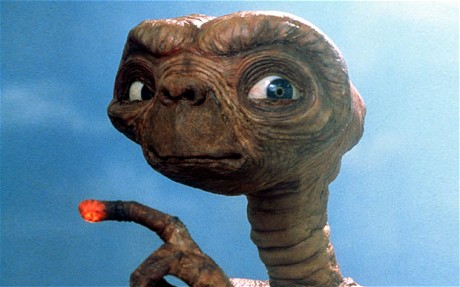
  • Noah, Aliens and Disillusionment

    Noah, Aliens and Disillusionment

    A favourite dinner topic, around our house when I was growing up, was the UFO crash (with five aliens on board) in Roswell, New Mexico on July 8, 1947.

    That’s how you roll when you were born to liberal parents in the 60s and 70s. Discussions about the Illuminati, Nessie, Big Foot, Dogons, Sirius, coincidence, synchronicity, religion and the supernatural were not alien in our home. It was standard fare.

    I suppose that’s why I’ve always been interested in all things spiritual, alien and unknown. I think I may even be a closet conspiracy theorist. With the kind of father I had, I understand why. But, that’s for another time and three brandies later.

    Recently, I revisited the supposed discovery of Noah’s Ark on Mount Ararat in Turkey. It was first sighted by a Turkish Army Captain, Lihan Durupinar in 1959 whilst examining an aerial photo of his country.

    There are three views: It’s a load of nonsense (www.snopes.com, the rumour-busting website, thinks it’s bunkum), it really is Noah’s Ark or it’s an alien craft.

    I’ve always wondered why government agencies supposedly cover up these mysteries and don’t just play open cards with their citizens. Surely we can handle the truth?

    Or maybe our governments (and I may be giving them way too much credit) understand that we can’t handle the truth. They may understand that we’re addicted to hope. And, it’s their jobs to keep hope alive by shielding us from the dark underbelly of reality.

    It’s not unimaginable that if there really was a UFO crash in Roswell (www.snopes.com is silent on this matter), it could shatter the worldview of a large portion of our society. If ‘Noah’s Ark’ on Mount Ararat turned out to be an alien ship. Ditto. Similarly, if the Sphinx in Egypt is actually 10 000 years old and not 4 500 as most archeologists believe or have misled us to believe … that has massive ramifications for large swathes of our planet.

    So, what’s the internal story around this? In my opinion, the only thing that keeps us going is hope. It can be a belief in a higher power, a belief that things will get better and that there’s a sliver lining to every dark cloud. I think if it wasn’t for hope and a belief in something, many of us would just give up and revert to our baser instincts.

    The thing is that the ‘truth’ doesn’t always set you free but it leads you from belief to doubt to disillusionment. I challenge you to deny that when South Africa became a democracy in 1994 you didn’t feel belief and hope. What do you feel now with corruption, poverty and lack of education prevalent? I’ll bet, it’s disillusionment. That’s how I feel, anyway.

    That’s why I think governments like to keep things fuzzy. Because when there’s hope and/or doubt there’s always a chance that things will stay the same (for some that’s heaven) or that things will change for the better (heaven for others).

    Let me distill belief, doubt and disillusionment even further into our own psyches. I think that many of us don’t act on our dreams and goals because we are scared that the truth will show us up for who we are … not that fabulous and rather ‘meh’. We are taught at a very early age to have belief in our abilities. And, in pre-schools today there’s an “everyone’s a winner” philosophy. Every child get’s a certificate for contributing. But, as you know, in real life, not everyone’s a winner.

    Maybe, just maybe most of us prefer to live in doubt (or hope) about our abilities. But the only way to find out if we ‘have it’ is to do it. And that’s where the rubber hits the road. Because when we actually try something we might fail at it. And that truth could suck the ‘lewenslus’ out of us and lead to total disillusionment.

    My answer for what it’s worth.

    Let the truth set you free. If you really suck at something, it’s better to find out quickly (fail early). This means that you can then focus your energies on finding something you can be successful at. I found out quickly in primary school that I would never sing in the choir (my screeching had cats running for cover) and consequently, I would never be the rock star I wanted to be. So, rather than flog that dead horse, I channeled my energies elsewhere.

    And, you know what, I wish I could tell you ‘I’ve arrived’. I haven’t. I keep failing at things. The truth is a bitter mistress. But the hard lessons she teaches me serve me in good stead.

    I’m in a better space, more resilient and getting closer to my Magnum Opus. Right now I am the best work I’ve produced. And that’s good enough for me.

  • The Strange Secret To Happiness

    The Strange Secret To Happiness

    Here’s  a hack I use to ensure my happiness (most of the time).

    When you’re in the traffic have you ever slowed down and given someone a gap so that they can cut in front of you?

    And, after this courtesy, have you expected a gesture of appreciation … a raised hand or a quick flick of the hazard lights?

    Have you been surprised (and angry) that the driver takes the gap without even so much as a nod in your direction?

    I would imagine that we have all experienced this. And, we have probably all been angry when someone doesn’t recognise us and appreciate our kind gesture.

    I know I’ve felt short-changed when I haven’t had appreciation.

    I think that we all crave recognition and appreciation for the things we do.

    Research indicates that one of the biggest motivators for employees is recognition and appreciation … strangely enough, more so than money.

    I have another take on this. If you really want to be happy, don’t expect appreciation.

    I used to expect a thank you or some gesture of appreciation every time I did something nice for someone. And, when I didn’t get it my nose was put out of joint and I got on my high horse. Short version … I got angry.

    I figured out quite quickly that I had two choices. Don’t do anything nice for anyone or don’t let lack of appreciation rattle me.

    The second option, patently, was the smarter one. Now, I don’t (ok, seldom) expect appreciation for anything I do for others and it has been a liberating experience.

    I wish I could say that I’m never disappointed when someone doesn’t show me appreciation. Unfortunately, I do from time-to-time get disappointed. I suppose it is my human condition that expects some kind of validation. But, I’m certainly less hung up about appreciation than I used to be. When I do get the rare person that shows me appreciation it is an absolute gift that makes my day.

    Of course, not getting appreciation doesn’t mean that you don’t have to give appreciation. You and I should be finding every opportunity to appreciate others.

    When last have you appreciated someone for an act of kindness?

    There are so many opportunities to show appreciation. Off the top of my head … when your wife cooks you a meal (whether it is (the meal) amazing or not), when your husband goes to the garage and makes sure the oil is topped up, when your work colleague offers to make you a cup of coffee and when your employee does good work.

    Just a pat on the back, a squeeze of the shoulder and the words, “Thank you, I appreciate what you’ve done for me”, will do wonders for your relationship with those around you.

    We are more inclined to do the things that are appreciated over and over again.

    So, if you want happiness, don’t expect appreciation and if you want to make others happy, give lots of appreciation.

  • Burn the Haystack. Find the Needle.

    Burn the Haystack. Find the Needle.

    I’ve no doubt that you’ve heard the idiom “Like looking for a needle in a haystack.”

    It’s based on the idea that it’s hard to find a sewing needle in a haystack. It means when something is almost impossible to find.

    It got me thinking about the Holy Grail and the Arthurian legends attached thereto. Just in case you’re not up to speed. The Holy Grail was the cup used by Christ in the last supper. And, in which Joseph of Arimathea received Christ’s blood on the cross. As far as I know, nobody has found the Grail yet. It’s rumoured to be in Ethiopia according to Indiana Jones.

    Thus, a Grail quest refers to something that we desire but it is just about impossible to achieve.

    If you’ve spent any time with yourself you’ve no doubt craved something for just you, haven’t you?

    We all want something. And, it’s different for all. What is it for you? Power, money, fame, relationships, status, peace, friendship, harmony, fulfilment, security, cars, houses and heaven?

    Here’s the question, “If you want something, why don’t you already have it?”

    Why is the thing that haunts our dreams so difficult to find? Like the proverbial needle in the haystack?

    I might have an angle, and an answer. But, first let me just put it out there … wanting wealth, power, money and fame is just a sideshow. It’s not why you’re dancing on this planet with your allotted 2-billion or so seconds. In my opinion, you and I are here to get our heart, soul and spirit right. We’re here to stand in awe of the magnificence that we live in. We’re here to live in gratitude for that which we already have and that is still waiting for us.

    So, now that I’ve sucked the fun out of wanting ‘stuff’, let’s go there anyway. Perhaps, the reason we don’t get what we want is because of one word: Excuses.

    Burn your damn excuses!

    I think the human condition is one overflowing with excuses and justification. We always have a reason why we couldn’t, shouldn’t and didn’t.

    We try. We don’t do (stealing the concept from Yoda). Or as Carlos Castaneda wrote, “A warrior lives by acting, not thinking about acting.”

    I believe that if we were to complain less, justify less and make fewer excuses, we would be a lot nearer to our goals.

    We also have an insatiable need to complicate what is simple, don’t we? And, we use complication and the drama we create in our lives as excuses to why we are not where we should be.

    The Gordian Knot

    Let’s go back in time to see if there’s another way to deal with ‘complication’. When he was appointed king, Gordius dedicated his oxcart to Zeus, tying it up in a peculiar knot. An oracle foretold that he who untied the knot would rule all Asia. Many people tried to untie the the ‘Gordian Knot’. It persisted in thwarting everyone for 100 years. Then, in 333 B.C,  23-year-old Alexander the Great arrived in Gordium.

    He couldn’t resist attempting to untie the legendary ‘Gordian Knot’.

    He struggled with it for a while and became more and more frustrated in his attempts. He unsheathed his sword and said, “What does it matter how I loose it?” With one powerful stroke he severed the knot and the whole of Asia opened up to him.

    Perhaps it would be an idea for you and me to stop complicating your lives and making excuses. Stop thinking about acting and start taking action. Cut our ‘Gordian Knot’ so that ‘Asia’ can reveal its splendour to you and me.

    Just burn the haystack. Find the needle. Do it now. Life is too short to mess about, it’s too short for excuses and it’s too short to watch opportunities pass you by. Go for it because as the old saying goes, “we regret more the things we didn’t do than the things we did.”

  • Curb your judgement

    Curb your judgement

    After his book launch an author complained that one of his best friends never bought his book. He ranted, saying that he expected his friend to support him by buying his book. He got nods of agreement from the the rantees.

    The author went as far as saying that he was prepared to terminate the long-standing friendship because of this ‘shameful’ behaviour. All, once again nodded in agreement. Except for one.

    He asked, “Is it true that your friend had to buy your book?” He went on to ask if it wasn’t conceivable that the friend expected the author to maybe give him the book for free because of the virtue of their long-standing friendship?

    He also asked if the author was prepared to break up a friendship over the price of a R150 book? The same friend who had helped the author out of many a tight spot and had been nothing but supportive throughout the blood, sweat and tears that writing brings out of one.

    It is easy to get on one’s high horse and judge someone for a perceived slight. But, who knows that person’s situation? The friend may have been going through a hard time financially and just managed to scrape enough money for the petrol to get to the book launch. The friend may be an inch away from debtors prison, his wife may be leaving him and he is barely hanging on. You see, one doesn’t always know the other side of the story.

    Take taxi drivers for instance. A seriously easy (and mostly-deserved) target for our ire. Generally, they’re hated for the way they take over the road, cut in front of us, stop at will and break every rule of the road. Monsters, one and all, aren’t they?

    But, is this true?

    From my understanding, a taxi driver has to make a set sum of money for his boss before he starts making any money for himself. Let’s call it R1 500. This means that he has to get as many passengers into his vehicle and drop them off as quickly as possible so that he can do this again and again and again. He may only start making money for himself late in the afternoon and could walk away with the princely sum of R200 for being up before the crack of dawn. This kind of pressure can’t possibly lead to sterling behaviour.

    Remember, like us he is a parent, a husband, a son and a human being. He is just trying to do the best he can do under the circumstances. Just like you and me. Perhaps our judgement should go to the taxi bosses whose yoke enslaves these drivers?

    My housekeeper was late for the umpteenth time. I got angry with her. She explained, that for the piddly (my words) R150 a day I paid her to clean up my mess, she had to get up at 4 am and catch two taxis. Then she had to do the same going back home. I can’t remember the detail, but her taxi fare was in the region of R70. So, her take home pay was R80. I don’t know about you, but I’m not sure I would go through the stress she does to work for R80 a day.

    I don’t get angry with her much anymore.

    I’m mindful that the universe doesn’t revolve around me, that other people have their own issues, hopes and dreams. And, that whilst I’m judging them, they too may be judging me because my behaviour is strange and abhorrent to them too. Perhaps a better way is to look at every situation with curiosity rather than with judgement.

    [author] [author_image timthumb=’on’]https://www.jacquesdevilliers.co.za/wp-content/uploads/2013/01/Screen-Shot-2015-06-20-at-11.43.17-AM.png[/author_image] [author_info]Jacques de Villiers is the strategic account director for the Jacques de Villiers Group. He helps set both his clients and his partners up to succeed. For his own account he speaks and trains on, personal excellence, leadership, marketing and copywriting.[/author_info] [/author]

  • From superficial to stupendous

    From superficial to stupendous

    Have you ever experienced the relief when a car alarm that has been going off for the last hour, stops?

    Suddenly you can take a breath and think clearly again.

    But, if it isn’t a car alarm, it’s some other distraction that’ll keep us out of our heads.

    I love distraction because the reality is that it stops me from thinking. More specifically, it stops me from thinking about myself. And, it stops me from living an authentic life.

    I like to keep it light and superficial because sometimes it is hard to deal with myself. I don’t want to have to ask (and answer) questions like, “why am I where I’m at?”, “am I happy and do I even know what will make me happy?”, “why am I not achieving my goals?”.

    Because if I’m forced to answer these questions I might not be happy with what comes out.

    I may just come to the realisation that I’m 100% responsible for the how my life has turned out. And, when I have nobody to blame but myself … that’s a bitter pill to swallow. Because once you come to that realisation that there’s nowhere to hide, then you have to deal with yourself. And, that can be hard.

    Thus, I keep myself busy so that I don’t have to face the reality of what I have created … my life.

    Theologian Frederich Buechner puts it more eloquently than I ever could, “We shy away from introspection because however fearful the surface seems, we fear the depths still more.

    Of course we fear the depths and try and keep things light and on the surface. But, it is only when we go deep that we can really figure things out for ourselves.

    And, when we truly plumb the depths of our hearts and souls and realise that, yes, we really are 100% responsible for creating our world, it can be quite liberating.

    Because if we’re 100% responsible, we have the power to change any situation we’re in right now.

    So, if you’re not happy with something in your life, you have the choice to do something about it right now.

    Take yourself off the grid for a while and shut the ‘alarm’ off so that you can come to grips with who you really are.

    Have the courage to go deep so that you can turn your life from superficial to stupendous. The journey is worth it, I promise you.

    Photo by Zsolt Zsigmond 

  • No Good Deed Goes Unpunished

    No Good Deed Goes Unpunished

    “This is no time to make new enemies”. These were the last words of French writer and philosopher, Voltaire on his deathbed when asked to foreswear Satan.

    I, of course, have no problem making new enemies (and upsetting old enemies) on a regular basis. Yes, I know, being arrogant, self-absorbed, difficult, short-tempered and petulant – with a weird (if any) sense of humour doesn’t help my cause at all.

    Yet, if I were a genius like Ernest Hemingway, Pablo Picasso, Leonardo da Vinci, William Shakespeare and Mr. Spock, these character defects would be eccentric (and expected) to mere mortals.

    Being a mere mortal, my frailties aren’t cute and eccentric … they’re just bombastic and rude.

    I collect enemies in three ways.

    • I don’t listen well.
    • I make up enemies.
    • I try to be helpful or “No good deed goes unpunished”.

    Non-existent listening skills

    I’m a shocking listener. I’m that guy. You know the one. That irritating creature who antagonises people by finishing their sentences for them and interrupting them in mid-sentence. And, of course, listens not to understand, but to get my viewpoint across. I promise you … nobody likes a self-opinionated smarty-pants. I’m trying to take a page out of Etko Schuitema’s book when he says that listening is a moral skill and it is suspending my agenda for the other. Not so good at it at the moment.

    Manufacture an enemy

    If I haven’t got a real enemy I make one up. Like I don’t have enough on my plate to contend with. I’ve conjured up an enemy. Let’s call him Jeb to save me the embarrassment of having to apologise to him later whilst nursing a black eye. The Lord knows that the log in my eye is far greater than the splinter in his. Jeb is a professional speaker. Whenever he presents a motivational talk or writes something, I just know it isn’t his own work. But, he claims it as his. Surely everyone knows that Zig Ziglar and not Jeb said, “Rich people have small TVs and big libraries, and poor people have small libraries and big TVs.”

    It drives me insane. And, it drives me to a froth that his audiences love him and lap up every word he says. And, Jeb, where’s the proof that millionaires read at least 60 business books a year and the rest of us don’t. I read more than 60 books a year and all I’m doing is making the authors into millionaires. I don’t know if it is that the audience loves him or that he makes more money than a small town and me (or a combination of both) that gets me so riled up?

    Of course, the irony is not lost on me that I might just be projecting my inadequacies onto Jeb. I know I’ve pinched a quote or two or 50 from someone without acknowledging the source.

    But, here’s the thing, Jeb doesn’t even know that I have an issue with him. And, even if he did, he wouldn’t change nor care to change. So, Jeb is in effect besting me without even knowing it. The only one who is losing in this self-inflicted drama is I.

    On a side note – manufacturing an “enemy” is a good way to rally the troops and keep them focused. And, in some circumstances killed – the so-called “weapons of mass destruction” that started the Iraqi invasion cost the USA 4 486 soldiers and more than 170 000 Iraqis (more or less 120 000 of those being civilian deaths). So, conjuring up an enemy is seldom helpful.

    No good deed goes unpunished – Oscar Wilde (he’s the handsome lad in the photo, by the way)

    Be helpful. That’s a sure fire way of making enemies. I get an A+ in this department. I have a ‘gift’ of being able to spot a grammatical error or spelling mistake with one eye closed, even if I’m in a drunken stupor. Naturally, this gift doesn’t extend to my own work which, more often than not, looks like the love-child of Tourette’s and ADHD. When I point out a mistake (with great humility and tact, I might add) I can see the shutters go down and ire rise. It has taken me years to realise that even if people ask for critique, nobody actually likes it. Most of us just want someone to agree with our viewpoint. Criticism hurts for the simple reason that it is probably true and the person being criticised has to come to terms with his or her frailty. So, I don’t critique anybody’s work now unless they ask me to (at least three times) because no good deed goes unpunished.

    I suppose that’s why I stay in my study and write as much as I can. Because if I’m out of my room unsupervised and not sedated, I will mix with people and invariably rub someone up the wrong way.

  • Three Lessons About Talent From Monks

    monks-453376_1280

    In his article,Eric Traub suggests the corporate world has much to learn from how Tibetan Buddhist monks learn. Whether in business, extreme sports, online gaming, or other fields, there are patterns to how individuals organize for mutual learning and achieve higher levels of performance. The patterns that Eric Traub found in the Tibetan monks include:

    • Cultivate dispositions rather than train for skills
    • Build “creation spaces” to enhance learning
    • Create environments of “play”

    For leaders and managers, the example of the Drepung monks raises three questions:

    • What are the most important dispositions to hire for and to cultivate in today’s economy?
    • What organizational policies, silos, or practices inhibit practitioners from connecting with those they can learn from?
    • How can I foster an environment that enhances engagement and allows for risk taking and learning from failures?

    To read the original article: Three lessons about talent from Tibetan Buddhist monks

  • Gold or God

    Gold or God

    I was thinking about North and South America the other day as one does when one is sitting in Benoni at a Spur restaurant.

    For some reason I was thinking about why North America was ‘wealthy’ and that South America wasn’t. One is ‘first world’ and the other is well … ‘third world’.

    I have a notion that when the Spanish settled in South America they went there for the gold. When the Pilgrim Fathers went to North America they went for God.

    The focus on spirit and something bigger than themselves and gold gave the Pilgrims an unshakeable purpose. They went to America to find the religious freedom they couldn’t get in Britain at the time.

    I think that’s what made all the difference.

    So, maybe this is true for us too. When we’re so focused on our paycheques and lose sight of what’s important we have third-world thinking.

    I believe that the human being was put on this earth for something more than just the gold.

    We were put here to answer a calling and to follow a path with heart. Of course, the trick is for each of us to find that calling in our own way.

    And, that’s the tough part. To find our purpose we need to take that road less travelled by and go in search of knowledge. We need to use the knowledge to fight and overcome our inner battles so that we can find the authentic essence within in us. We need to be clear as to how we can make something meaningful in the short space of time we have.

    I, like you, live in the real world too. So, I’m not against ‘gold’ at all. I’m mindful that when we feel insecure because we don’t have the means, purpose and meaning can fall by the wayside. I’m just saying that gold must not be our focus because there’s no way it can make us happy, ultimately.

    In our striving for purpose and meaning I’m of the opinion that we would be better served by focusing on Saraswati (the goddess of knowledge, music and art) and not on Lakshmi (the goddess of wealth).

    You already know how it works, don’t you? When we focus on Saraswati, Lakshmi gets curious and follows.

    When you find your purpose your heart will sing and good fortune will follow.

  • Attention is superior to intention

    Attention is superior to intention

    It was when I was rereading Etsko Schuitema’s Intent: Exploring the Core of Being Human the other day that I came across this aphorism: Attention is Superior to Intention.

    Eckhart Tolle made the same observation when he said, “Realize deeply that the present moment is all you have. Make the NOW the primary focus on your life.

    And, to add some more weight to this, Carlos Castaneda said, “A man of knowledge lives by acting, not by thinking about acting.

    These quotes and more, highlight the weakness in setting goals for our lives.

    Our goals are full of good intent. We want the fancy car, we want to lose weight, we want to quit smoking, we want to travel, we want to be rich, we want a loving relationship and the like.

    However, most of us are not prepared to pay attention to the process of getting our intention.

    Unless we focus on the actions and do the work to get to our end destination, all the visualisations and affirmations in the world won’t get us any nearer to our dreams.

    I believe that many of us miss the boat because we’re not prepared to pay attention to the work we have to do in the moment to achieve our dreams. Just in case you think I’m judging, I’m not … I’m as guilty as the next man of not working as hard as I should. I miss the boat plenty.

    Perhaps some of us are just not prepared to pay the price to get what we want. Perhaps I can just be blunt enough and say it, “We are lazy and want our success handed to us on a plate”.

    As Thomas Edison said, “Opportunity is missed by most people because it is dressed in overalls and looks like work.

    I think many of us have bought into the saying “work smarter and not harder”. And, maybe it has given us an excuse not to work too hard. The problem is that we are not working smarter either. So, if we take away hard work and smarts, we’re pretty much left with nothing.

    We are also misled by the media’s portrayal of people that are ‘overnight successes’. I think if we interrogate these so-called ‘overnight successes’ we’ll find the opposite is true. We’ll find that they worked extremely hard, over a long period of time whilst enduring failure after failure to achieve ‘overnight success’. 99% of ‘overnight success’ stories are myth.

    I suppose the trick is to figure out what it is that we really want in our lives. Then set action plans to achieve what it is we want and then use every moment wisely and knuckle down and do the work.

    Because as you know, the only place where success comes before work is in the dictionary.