When we hunt an outcome, we have predatory attention.
Be Still, Predatory Expectations …
Our lives are full of expectations (hopes). When we walk into a room full of people we expect that they will like us and accept us. We expect things to work in our favour. We expect a result.
What we are really doing is hunting an outcome. Our attention becomes predatory. And, it’s exhausting. The more you chase something, the more it runs away.
Go, ask a tiger … for every 20 hunts it attempts it makes only one kill. The more we chase something, the more it eludes our grasp. Think about spammy marketing and pushy sales people.
What if there was another way? What if we just did our best and became still and receptive to whatever the outcome is – good or bad. What if we just did something for the pure joy of doing it, and not for an outcome? How’d it be if we didn’t have any expectation?
You know how this works in any case. Castaneda summed it up beautifully: All paths lead to nowhere, so find a path with heart. In essence what he is saying is that even if we get what we want, we will eventually be disappointed, and then we will want something else.
It’s a never-ending loop. I figure that if I just am, have an open heart and temper my expectations, this journey will be a lot more fulfilling.
One of my favourite pieces of text is Homer’s epic poem, The Iliad, about the last weeks of the Trojan War.
This was Alexander’s favourite work too, and he read it endlessly.
Homer’s other seminal work, The Odyssey, is also a favourite of mine. The protagonist, Hercules, was one of my favourite heroes as a child, after Paul Newman.
Alexander’s tutor was Aristotle, who was taught by Plato, who was taught by Socrates. I’d like to believe that all of them read The Iliad too.
I find it fascinating that their eyes pored over the same text that mine have. Books are a magnificent way to make gods and commoners the same, even if only for a brief time.
For some reason, today I’m reminded of the words of the poet, Dylan Thomas.
Do not go gentle into that good night,
Old age should burn and rave at close of day;
Rage, rage against the dying of the light.
Peter (75) from Australia signed a contract with me to write his memoir because he wanted to leave memories for his children and grandchildren.
Two days later his light burned and raved no more.
Peter’s daughter asked me, “Did you and dad write his story?” I replied, “No”.
Don’t let you and your parents’ memories disappear into the dying of the light.
Write them down now, so that one day you can leave beautiful memories, and a legacy for those left behind.
If I have learned anything as a memoir writer (5 memoirs to date), it is that you shouldn’t wait until it’s too late. Rage, rage now, against the dying of the light.
Go make memories with your parents. And your children. Go now!
If you feel overwhelmed by branding and marketing your business, you’re not alone.
Even though I run a marketing shop, there are days when I find marketing to be a soul-sucking, money-gulping and time-wasting minefield, mired in complexity, empty promises and poor results.
These are the days that I ask (「๑•₃•)「 ʷʱʸ?.
Those are the days that I just want to blow it all up and go somewhere quiet, and play chess with my friends, drink whiskey, catch bass and write my books.
Luckily those days are few, and my 20-year love affair with marketing gets me out of bed, excited.
My name is Jacques, a marketing evangelist, author and professional speaker.
Most of my clients come to me when they’re at their wit’s end. They’re:
… that the enterprise they’ve put their heart and soul into is not getting the traction and success that it should.
They come in two forms:
* People who have never tried marketing * People who have thrown money and resources at marketing, with poor results (or no results)
In my experience, they don’t have a marketing problem, they have a belief problem. A clarity problem. And, they tell weak, insipid, and uninspiring stories.
The actual process of marketing is easy. I’m sure that if you had the time, you could learn it and implement it quickly. But you don’t have the time because you have other priorities, don’t you? Like working on your craft and making sure your families are secure, and that your dreams come true.
There’s no shortage of talent. Marketing professionals are ubiquitous. Shake a tree and a copywriter, social selling ‘expert’ or digital marketing agency will fall out of it.
Let’s be frank. If your business is not growing and is contracting, you should consider increasing your sales and marketing efforts so that you can stay competitive and profitable.
Hire marketers; I’m sure they’ll do a marvellous job for you. Seriously.
If you don’t know where to start, I can introduce you to fabulous marketing people that’ll do an astounding job and deliver on any brief you have.
My particular strength is getting your prospects to choose you, by:
* Clarifying your contribution so that you can build a business that inspires you, and that you’re proud of. * Writing sparkling and brilliant copy * Writing legacy-worthy LinkedIn profiles
Set up a call with me so that we can explore how we can expand your business. Remember to bring a chess set, whiskey or a bass fishing rod (>‿♥)
“Alas, for those who never sing, but die with the music in them.”
Oliver Wendell Holmes
As an author, I’m well versed in the Hero’s Journey storyline. It is the most used tool in stories, movies, television, books etc. Think Star Wars and Harry Potter.
As writers and marketers we use the Hero’s Journey in our text as well (to a lesser or greater degree). Our hero is ambling along in his/her normal life. An inciting incident disrupts normal life (geyser bursts, we get ill, relationships fuck out, our car licence expires and so on). We then accept the call to fix the problem and thus go on an adventure. We find a mentor (service provider). We go through trials. We go through the dark night of the soul. We get the prize. We take the elixir back to our tribe so that they benefit. We learn valuable lessons. We grow. We are better off.
Here’s the problem, though. Most people don’t really want to grow, become better and dent the universe. We’re quite happy to stay in our ordinary world … in our comfort zone. The zone where our dreams go to die.
This is understandable, of course.
I don’t know about you, but every time I venture over the wall of comfort, I run into a lot of pain. As a writer, the pain comes wrapped up in rejection and ridicule.
And, danger.
In my case, I also write copy for clients. If the stuff I write is too far out there for them, I could lose the job. I have to eat, so I take the coward’s (or realist’s) route and go back to writing banal and safe copy. I go back to both our comfort zones because it is safer and less painful there (for both of us).
But that’s the problem with a comfort zone. We go to it because it is supposed to keep us safe. But, actually, all it does is keep our lives small.
Let no one kid you. When you step out of your comfort zone, you are going to be massively uncomfortable and feel pain. That’s just the way it is. But if you accept the call to adventure, and can cut through the Gordian Knot of complexity, pain and discomfort, the whole of Asia will open up for you. A magical world full of endless possibilities awaits you.
There’s one thing that every Hero’s Journey has that will make the journey easier, and that’s a mentor.
Taking the first step of your journey towards endless possibilities is not the real thing that takes courage. It’s opening yourself up to possible (highly likely) failure and disappointment.
The superpower that will get you through this is vulnerability. Without being vulnerable, you can’t move forward. And, we all need help with moving forward, don’t we?
That’s why we have to become vulnerable, and open ourselves up to being helped. We have to ask for help. We need mentors.
I don’t know about you, but that’s where my courage is tested. I could ask for help, and get rejected. Just the thought of being rejected makes me want to throw up and cringe in fear. It makes me want to avoid asking for help so that I can scuttle back to my comfort zone … the place where my dreams go to die.
Of course, it doesn’t have to be like that, does it? Become vulnerable and ask for help so that you can move forward. What if you could enter a world of endless possibilities? How would that feel? How would that look?
I think it would feel fabulous.
Remember, you were created as a masterpiece whose job it is to craft a master-work.
Go. Go do this.
I can’t wait to see what mischief you’re going to get up to. Whatever it is, it will benefit you and, by extension, us.
It only just occurred to me why I sign off this newsletter and marketing pieces with:
I love you,
Jacques
or
You’re the Job
Jacques
Even though it is a courtesy to you, and I really do mean it (that I love you), every time I sign off it’s a reminder to me.
It is a reminder to me to love myself, that I’m the job, that I’m a masterwork creating a masterpiece, that I’m extraordinary, that I’m worthy and that I’m lovable.
I’ve started listening to how I speak to myself as a conscious exercise in mindfulness.
F%3k me … if I spoke to anyone else how I spoke to myself (with disdain, loathing, frustration and doubt), I’d have no friends.
If I cannot even treat myself with the respect and love I deserve, how am I going to treat my friends and my clients?
So, I’m stopping this nonsense and I’m going to speak to myself like I’d speak to my creator … with love, respect, awe and gratitude.
I’ve been running informal Quantum Jumping meditations based on the work of the late mind science engineer, Burt Goldman with some of my friends. The idea is that there are alternate universes out there where there’s a version of you that has everything you could wish for. We go into those universes and visualise the ideal you and manifest whatever it is you want to be and do. When we come back to this reality, we bring a bit of that reality with us and this kicks off the manifestation process.
It occurred to me the other day after hearing a presentation by mindshift coach, Robin Pullen, that one doesn’t have to travel to other universes to tap into the power of manifestation. You can stay right here, in this reality and create what you want. It’s just fun travelling to other universes, don’t you think? So, I’m still going to keep doing that. Robin mentioned something about state management that gave me a moment to pause and think about how I manifest in this reality. If I’m in a resourceful state, I will attract that. If I’m in an unresourceful state, I will attract that.
Let’s explore this by way of an example. Have you ever sent out sales proposals to potential clients and gone through a dry spell where not one was accepted. It’s quite disheartening, isn’t it? If it happens often enough, you start doubting yourself (or at least, I start doubting myself). You start the self talk that spirals you down … “My stuff sucks. I don’t know why I bother, they probably won’t go for this proposal. What’s the point? I suck.” You know the drill. Perhaps this has happened to you?
Here’s the danger … because we’re pretty much all in a state of quantum entanglement, the way we feel in the moment affects the one that we are trying to connect with. In the proposal example … if I come from a negative unresourceful state where my gut, heart and head are in turmoil, I will create a similar state in the person I’m trying to influence. My negativity and insecurity triggers his/her insecurity too. So, if there are two negatives they will repel each other. Thus, my proposals will not be accepted.
The idea then is to be in a resourceful state. A state where you feel positive and empowered. A state where your intent is to benefit the other person. A state where you come from a place of fullness so that you have more to give the other person. Come from a place of love (love for yourself and the other) and see how you start manifesting what you want. And, I’m not talking just about the stuff you (think) you want … that’s easy to get. I’m talking about the stuff that matters … connection, love, happiness, fulfilment, security, belonging and joy, amongst others.
You have everything needed for this extravagant journey that is your life. Carlos Castaneda
If you’d like to receive more articles like this directly to your email, subscribe here.
A number of people have asked me why I stopped sending out my newsletter. To be honest, I’ve had a ‘dark night of the soul’ experience and retreated into my cave to lick my wounds and make sense of my world again. Those panic attacks I wrote about had turned into depression (I can say that because I have 20 degrees in psychology 😉 – it’s probably just something called Jannie Jammergat) and it was quite debilitating.
Long story short, my partner Estelle left to pursue her dream in Australia (and because I only have a diploma, am over 45 and don’t have a quajillion dollars to invest in starting a business there, I cannot go with). So, we consciously uncoupled on 7 June. We decided to honour our brief relationship with love, compassion and gratitude and not acrimony and regret. We both love each other dearly, but it is not our path to be together.
Of course like any good author, I’ll write a book about it because the nine months we were together (yeah, a birth) were the most heart-opening, loving, triggering (Carlos Castaneda’s Petty Tyrant incarnate) and healing experience for both of us. We were soulmates, or according to the clever people, twin flames (who come into each others life for a short period).
Because I have 20 degrees in psychology I’ve diagnosed myself not as depressed, but as grieving. So, I sit with the process, the pain, the heartache and try and heal from it (Just like Estelle is doing in Australia).
But this story isn’t about Estelle and I. It’s actually about the lexicon we use to frame our reality … the register and the vocabulary we use.
There were two ways we could look at our experience: heartbreaking, shattering, pain, hurt, rejection, abandonment … I can go on.
Or we could look at it as a: healing, loving, growing, insightful, grateful, powerful and heart-opening experience.
Of course we’re both sad and grieving the loss of our human attachment. The reality, however, is that our relationship is something to celebrate. I was gifted with an opportunity to really love someone at the deepest levels possible; as was Estelle. Since my journey at the Sufi retreat in 2016 I’ve been trying to get out of my head and into my heart and connect with the divine (in me).
It was easy sprouting wisdom from the safe domain of a retreat or as an intellectual exercise … not having to be in the blood and guts of life. You don’t get your hands dirty or your heart tested.
So, spirit said, “Oh, you really want to open your heart, do you?” Well here you go: meet Estelle. Through Estelle and a shit ton of work from my side, spirit got me to integrate my learnings and insights in a very real way.
In short, Estelle loved my heart open … there was no vocabulary of breaking, tearing, shattering. And, in the process, I loved my own heart open and am changed as a consequence.
I suppose I could have chosen, “Watch Your Language” as a title for this article, but Lexicon of Love seemed more apt. But yeah, watch your language, be vigilant of your vocabulary and be mindful of how you speak to yourself and frame things. What I’m starting to understand is that every experience is for our higher good, even though it may not feel so at the time. As my friend Etsko Schuitema loves to say, “The world is your ally.” I think he’s right.
My heart has been loved open. That’s the lexicon I choose.
I write one masterpiece to ninety-one pages of shit. I try to put the shit into the wastebasket. Ernest Hemingway
If I was going all spiritual on your ass, I’d say that Hemingway had it pegged when it came to calling it. Put the shit in the wastebasket and move on with your life. We know he didn’t have life pegged because he sucked on a shotgun in the end (be it by his own hand, the mafia or the CIA, we’ll never know).
Today I want to explore book writing.
If you want to write a book, don’t. Unless you’re ready to face every demon, weakness and mental frailty you have. Because they will all be tested. I promise you.
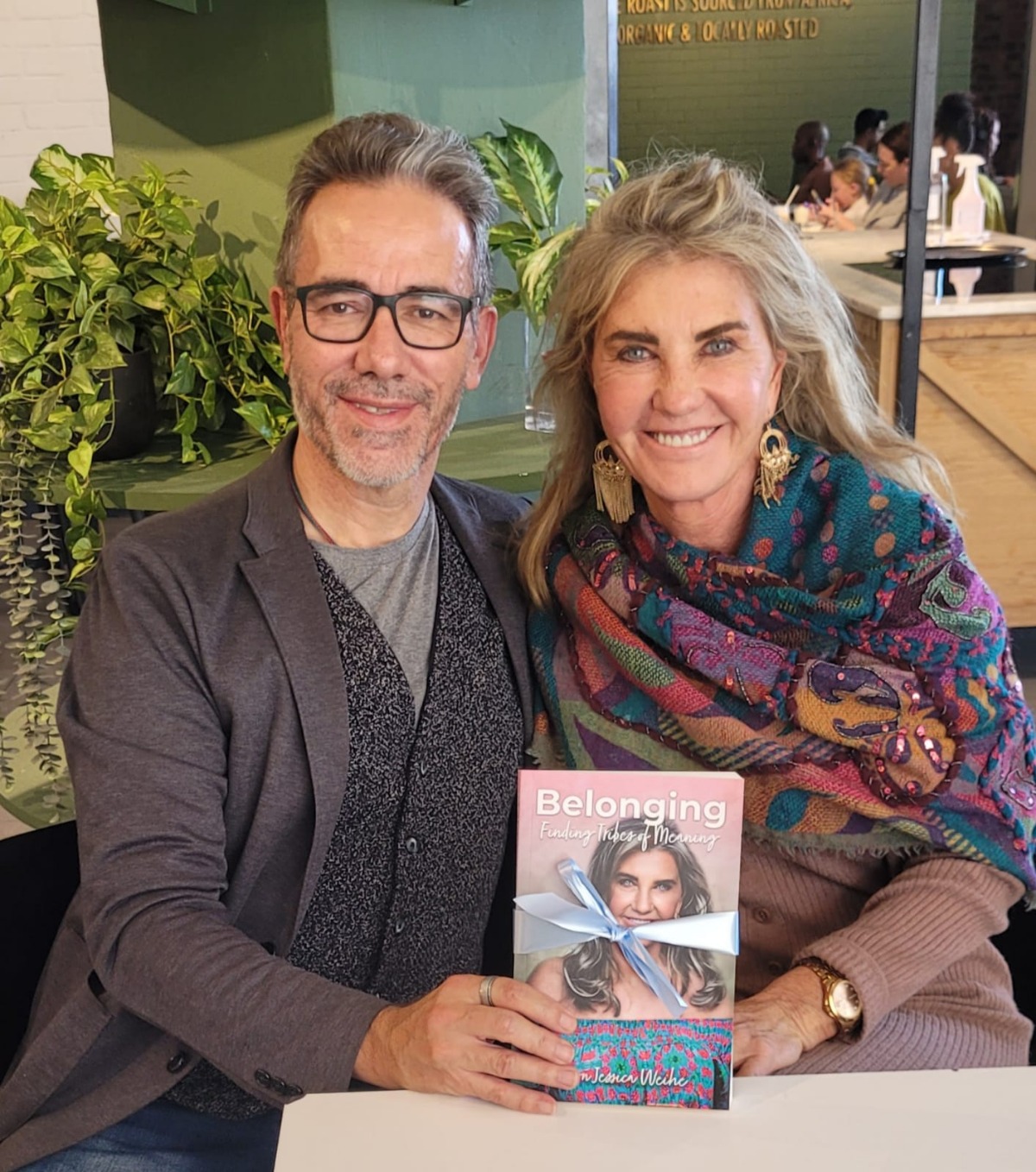
My friend Alison Weihe just finished her book (I had a small hand in birthing it as an editor).You can get it here.
It’s a great book. It has been sent to Mindvalley … don’t be surprised if you see her as a main stage speaker in Estonia this year.
This is what I said about Alison in May 2021on LinkedIn and it is unfolding just as I predicted. She got a standing ovation at a peer conference on Sunday. You’ll soon see her everywhere.
I’ve only known Alison for the shortest time (three years). First when she was an emerging speaker at the Professional Speakers Association of Southern Africa, then as a friend and finally as a client.
She has metamorphosed into a beautiful butterfly when it comes to the craft of storytelling. I’ve been privileged to watch her grow.
I’m a big fan of the Mindvalley programmes, as is Alison – it has the most enlightened, engaging and brilliant teachers on the planet who are raising human consciousness.
I have no doubt that Alison will one day be standing on a Mindvalley stage in Estonia sharing her wisdom and mesmerising the audience with her skill, storytelling and wisdom.
If I were you, I’d book Alison now to speak at your next conference to inspire your employees … she’s still affordable. When she hits superstar status (as I’m sure she will) and gets on the world stage, she might just be out of your and my price range.
Go to her now, it’ll be one of the best decisions you’ve made for your staff in a long time.
The Truth Be Told
The truth be told, it took it’s toll, though. Every book I’ve ever been involved with (either writing or editing … just over 33 now) was like giving birth (I’m not qualified to say that, of course) without any pain medication, protracted labour in a fetid French gutter reminiscent of the great book, Perfume: The Story of A Murderer by Patrick Süskind.
Alison, like all the authors I know went through something like this:
My writing is shit
I’m shit
This is hard
I hate it
I hate myself
I awesome
I’m magnificent
Who am I kidding
I want to kill myself (just like Ernest Hemingway, Virginia Wolf, Hunter S. Thompson, Sylvia Plath and Yukio Mishima, amongst others).
Who wants to read this crap
This is self-indulgent
My life is boring
I’m boring
I hate my editor … she eviscerated me
I want that piece in it’s my best work … don’t take it out … nooo (Kill your darlings)
I have nothing more to say and I’ve only written 20 000 words.
Is this really my philosophy. I sound like a raving lunatic
What if people don’t like it
What if they hate it
What if I only sell 10
I want to belong
I want to be heard
I’m scared
I don’t want to be heard. I want to hide
I’m so lazy. I watched Netflix the whole day instead of writing
I’m lazy
I’m useless
My life’s a waste
I want to throw the book in the dustbin
I wish I could write like Margaret Atwood (no, shit, so do I)
This book’s not good enough
I’m not good enough
I will be persecuted
It’s my fault (what’s your fault? That your parents split up, that your partner doesn’t love you enough and, that the psychopath, Putin invaded the Ukraine? What is it that’s your fault?)
Ok, so that was just off the top of my head.
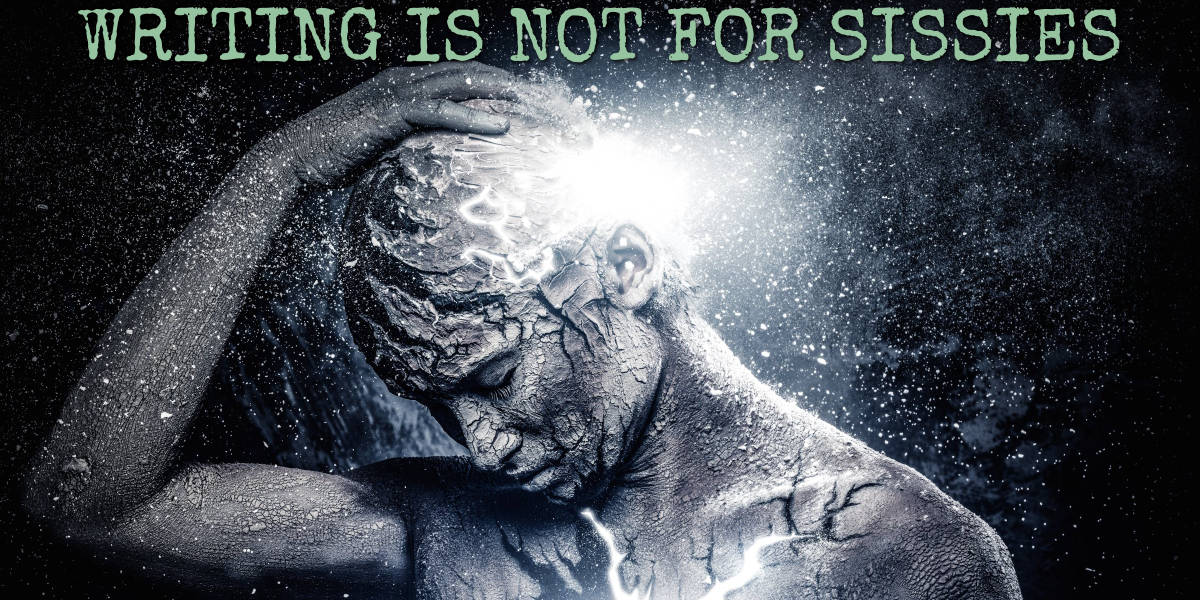
Writing is not for sissies
Writing is not for sissies. But neither is living. It’s hard to craft a masterpiece. But that’s your job. Really, to make your life a masterwork and a masterpiece is the only worthwhile job. You’re the job.
Not everyone should write a book, I get that. But everyone should go deep and explore who they are. Do the inner work. Do the hard work. You can’t outrun your demons, I promise you. They will catch you and mess you up. Read this article if you think you can hide.
So, if you don’t want to write a book, at least journal and write about your feelings, fears and phobias. Write about your joy, your love, your magnificence, your awesomeness, your gratitude. Just fcken write.
Here’s what you’ll find will happen. You’ll start learning about what triggers you. What story you believed so that you live like you do now. Who you really are and who you can really be. You’ll find out that you’re on your own personal journey with spirit. Don’t worry about anyone else’s journey … that’s their story. One day when they’re called home, they’ll be asked about their story, not yours. “Think about it: What weakens us is feeling offended by the deeds and misdeeds of our fellow men. Our self Importance requires that we spend most of our lives offended by someone.” Carlos Castaneda
For me writing helps me get closer to me and to source. The more I shed what’s holding me back, the lighter I feel and I become lighter. I become light. The closer that I get to source, the more I realise that I was created in love, by love, for love. When I look at myself through my creator’s eyes I am in awe of how I am seen … I’m magnificent, masterful and majestic. I’m here for a purpose … to be the change I want to see in the world, to be light, to live, to love, I’m here to keep my heart open to the possibility of it all.
So are you here … you that shine, love and live. Go full out, figure it out (sooner than later) and become the masterwork you were destined to be.
Go and write something, even if it is just for yourself. If you need tools, go and look at Julia Cameron’s creative recovery writing tools. Another great tool is Jordan Peterson’s Self Authoring work.
PS. If you want to put a book out in the world, but you’re scared. Consider this:
I know that you probably have more writing talent in your left pinkie than I have in my whole body. Don’t get held back just because one person eviscerated your writing (you) on social media. Just because one person said you weren’t good enough (you are enough). Just because one person is hateful (hates themselves). That’s their pain and their story, not yours. Tell your story because it is useful and it will help others find the light the so desperately seek.
If you want to receive similar articles to this in your inbox, subscribe here.
Gratitude is the grammar of your soul Without it life can be quite a mess Be mindful that you’re the point of it all The story you’re in now was written for you, to enchant, enrapture and elevate you You’re not here to play small but to stand tall The creators ask nothing in return … except that you burn Burn with awe Burn with gratitude Burn with joy, happiness and LOVE You’re the point of it all You’re a masterwork creating a masterpiece You’re getting to express your divinity You’re getting to play here for a little while and get to move the dial You’re your creators’ greatest work. Their magnum opus Be in awe Be in gratitude Be you … you who are the point of it all